

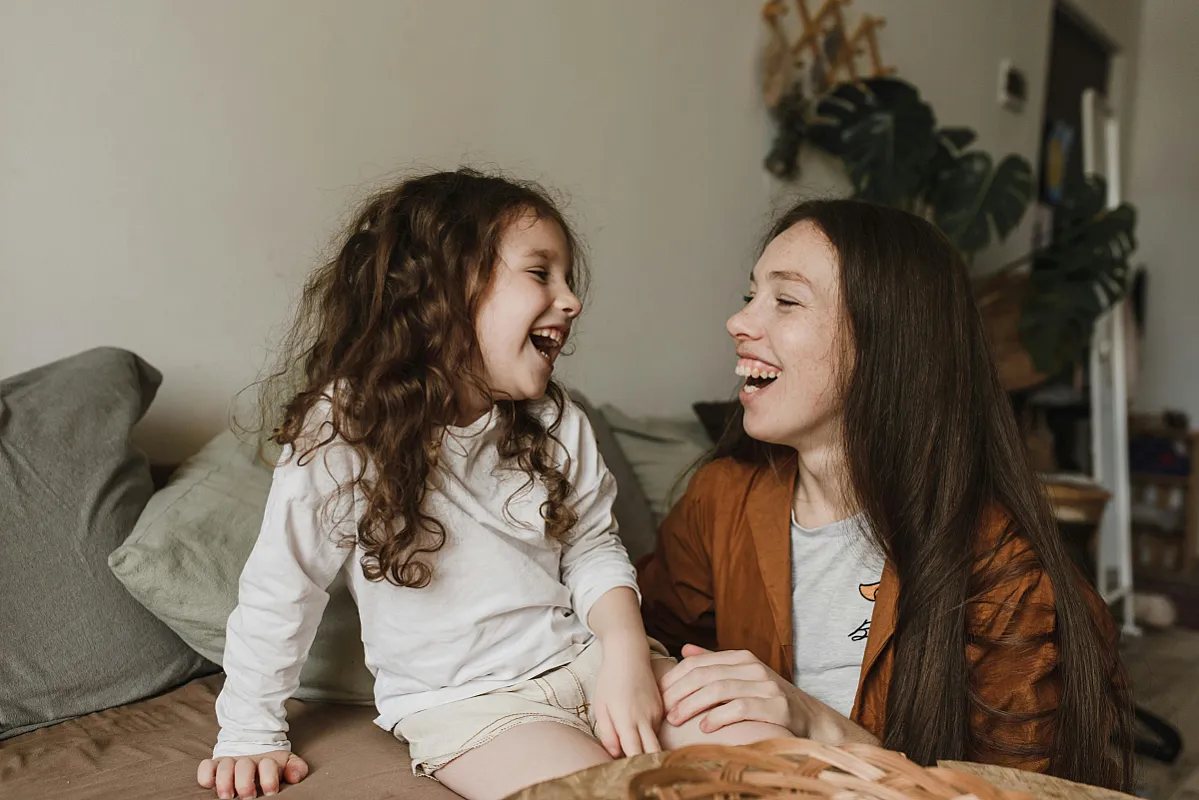
An emotionally healthy child can recognize his emotions and express them correctly. In the process of upbringing, a small person gradually expands the range of his emotions, learns to be flexible, form a character and consciously approach the choice in life. This article discusses how parents can help a child gain important skills for emotional health in childhood and in the future.
The role of the child’s emotional health
A child’s emotional health is an indicator of their mental well-being, which significantly affects their physical health, thinking and learning. Positive emotions have a beneficial effect on immunity and academic performance in school. Negative, on the contrary, interferes with concentration and impairs memory.
Let's give you a simple example. The family is forbidden to express resentment and anger. If the child is hurtful or irritated, he has to hide what he feels, otherwise punishment will follow. Suppressing emotions from childhood, the child grows constrained, which in adulthood is often a consequence of the appearance of panic attacks, phobias, depressions.
Another example is gadgets and their impact on the emotional health of children. Students don’t understand why they need to study textbooks when you can simply search the Internet. As a result, we see how children’s concentration on lessons decreases and motivation to study decreases.
Not to mention the influence of social networks, where children form an opinion about themselves based on the number of likes. For social approval and high self-esteem, it is enough to take a photo or make a video. Then why make an effort to achieve something if it’s so simple?
Unfortunately, all these problems sometimes escalate into accidents that we learn about in the news. That is why it is so important to teach a child from childhood to understand their emotions and be able to manage them, laying the foundation for the formation of a mentally healthy and strong personality.
5 Important Skills for a Child’s Emotional Health
A person is born with basic emotions: joy, interest, fear, surprise. In the process of growing up, he learns to understand not only his emotions, but also the emotions of other people, and also tries to use them to solve various problems. However, before the child learns this, he will react very violently.
The area of the brain responsible for controlling behavior and emotions is formed in a young person by the age of 3-4 years. Self-control develops gradually, the child begins to realize and learn to control his various emotions.
But often it is not enough just the capabilities of the brain. The child needs tools with which he can control his emotions and the appropriate behavior patterns on which he will rely. Who should he be? Of course, mom and dad, grandparents.
The development of emotional intelligence of the child is a gradual learning of the child:
- Notice your feelings and understand them
This skill helps children become more aware of their strengths and weaknesses, think positively and have healthy self-esteem.
- Manage yourself.
This is necessary so that the child can control himself in stressful situations, independently motivate himself to set certain goals and achieve them.
- Empathize and help others
This includes the ability to understand and accept others, empathize and support in difficult situations.
- Communicate
This skill helps to make new acquaintances, maintain relationships, fight back if necessary, stand up for yourself. This includes the ability to listen, the ability to communicate and conduct constructive negotiations.
- Be determined and responsible
It’s about making decisions and being aware of the consequences. A child with developed emotional intelligence will weigh the pros and cons before taking a serious step. For example, should you join a dubious company or try something forbidden?
How Parents Can Help
The mental and emotional health of the child is primarily the responsibility of mom and dad. While the steps below may seem simple, they require patience and regular practice. Because children learn well in conditions where everything happens smoothly and gradually.
- Be attentive to the child: watch how he behaves, ask if he is all right.
- Communicate on various topics, analyze his actions.
- Show how you can express your feelings through drawing, games, etc.
- Teach self-control, gently explaining how and where to behave.
- Support your child’s ideas and help them implement them.
And, of course, do not forget to work on yourself. Don’t bring negative emotions home, leave them at work. The child should feel the care and love of parents, understand that he is always welcome and sincerely interested in his life, achievements.
The mental and emotional health of the child is formed in the process of orderly work of the family and teachers. Therefore, it is very important to start paying attention to the emotional education of your child at preschool age.

Leave a Comment