

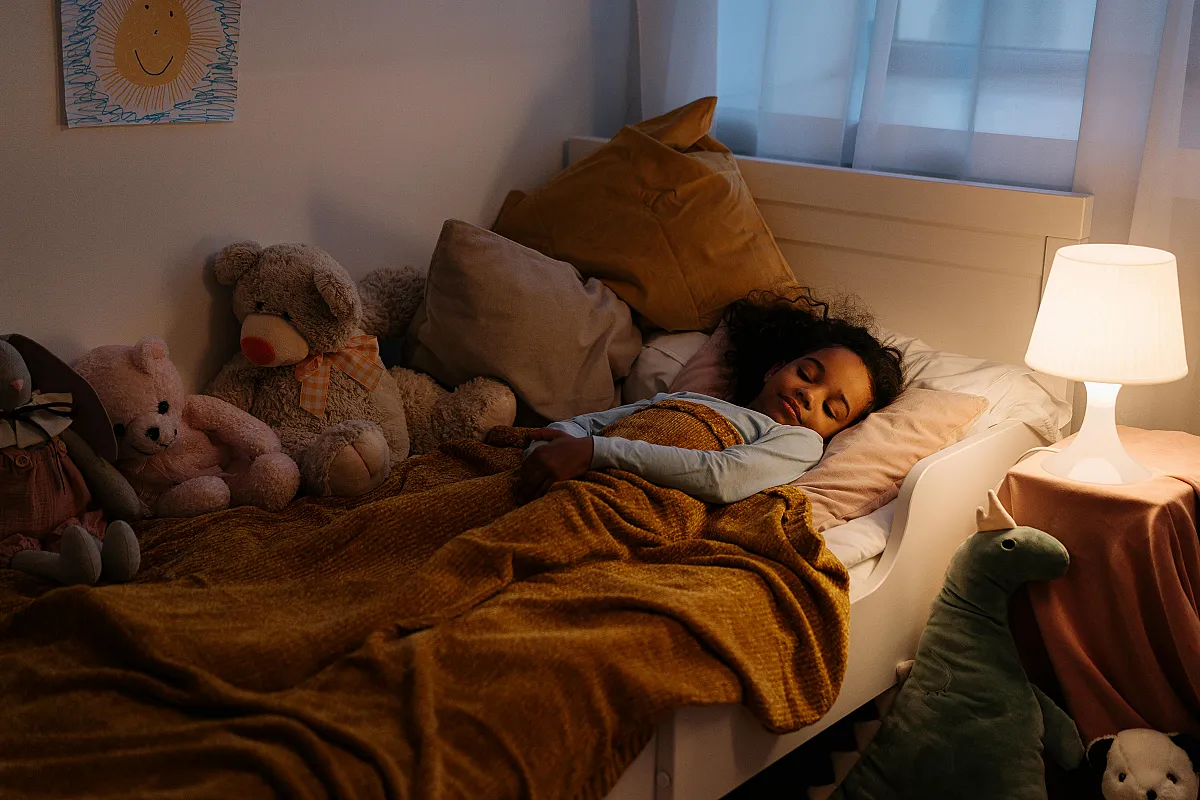
The main problem that many mothers face is putting the child to sleep. Why doesn’t the baby fall asleep when you can see he’s tired? Why not help motion sickness, songs, fairy tales, white noise? How to put a child to sleep quickly and without unnecessary hassle? In this article, we give brief answers and tools “on the case” to help mothers.
About rituals and why they don’t work
Ritual is a certain order of action of mother and child before bedtime. For example, in the evening it can be a quiet game, reading a fairy tale, bathing, relaxing massage in the crib or other options:
- feeding;
- walk;
- joint cleaning of toys;
- listening to quiet music;
- drawing, etc.
Perhaps you have already tried to introduce rituals, but did not get the desired effect and decided for yourself that this will not work with your baby. This is true if you do not follow the rules. That’s why it’s so important to be consistent and:
- observe rituals for sleep every day;
- do not change the order of actions (for example, walk-fairy tale-bathing-massage in the crib-quench the light-stroke on the head under the song-sleep). This order should be unchanged from day to day.
- Don't miss rituals.
If you adhere to these recommendations, the child will develop a habit, there will be “sleepy” associations and falling asleep will be easier and without stress.
Of course, it may seem that all these actions take too much time from an already busy mom. But, believe me, spending time on them is much more pleasant than trying to put a child to bed every day from 8 p.m. to 12 a.m.
You just need to find your appropriate “set” of rituals that will fit comfortably into your daily routine.
What time to put the child to sleep at night
Here you need to pay attention to the age of the child. Since the ideal time period for children from 3 months to 6 years is 18.30 – 21.00. It is at this time that babies begin to produce melatonin, a hormone that helps them fall asleep quickly and easily.
Watch your child and see what time he or she starts yawning and rubbing his or her eyes – this is the time to put him or her in bed.
If you miss this gap, it will be very difficult to lay it down in the next two hours. Melatonin will replace cortisol, the baby will begin to become active first, and then capricious. The nervous system is overexcited and night sleep will be intermittent and restless.
What mistakes parents often make
Long styling, tantrums, frequent awakenings at night, restless sleep can lead not quite noticeable mistakes of moms and dads when:
- The child is not tired and does not want to sleep.
- They try to lay the baby earlier / later than usual;
- He's not relaxed enough.
- No sleep rituals;
- Every day the time of falling asleep is different.
- The ritual is observed from time to time;
- In the room there are no conditions for comfortable sleep.
We want to correct mistakes and solve problems. So be patient, follow the recommendations and you will succeed!
Therapeutic tales for the night
According to psychologists and experts in the field of child development, bedtime stories can become not only a good family tradition, but also bring great benefit to the child.
- teach life;
- develop speech and memory;
- Help them understand themselves;
- They will calm down and put in a positive mood.
It is better to read the child a fairy tale before bed in a monotonously quiet voice to help him relax and enter a sleep trance. Gradually stretch sentences, slow down the pace of speech, saying the words out.
What stories are best for the night? When choosing, focus on the age and preferences of the child. The main thing is that he was interested and could understand the plot.
How to teach a child to fall asleep on their own
As the child grows up, the parents face another question: How to teach the child to fall asleep on their own? Can this be done easily and without stress?”
There are many different methods, but if you do not complicate it, you can reduce everything to three simple recommendations:
- Put your child to bed when they are really tired. But remember the time interval from 18.30 to 21.00, which we talked about earlier.
- Try to leave the baby in the crib alone, gradually reducing the time you are near. For example, you stay in the room with your child until the child is fully asleep. After some time, you begin to leave the room 5 minutes earlier, even later - 10 minutes and so gradually reach the moment when you begin to leave the nursery immediately after you finish reading the fairy tale. So the baby will gradually get used to the fact that staying in the room alone is not at all scary and will fall asleep on his own.
- Give the child the opportunity to calm down on their own. If your child becomes moody when you try to leave him alone, do not rush to calm him down. If after a couple of minutes he calms down, you can continue to practice independent falling asleep. If the whims turn into crying or hysteria, calm the child and go out again.
There are other ways to teach children to fall asleep on their own, including the popular Estiville method. It is recommended to use it for children from 1.5 to 2 years and older, when the baby already understands the meaning of the words spoken. During the day, you need to explain to your son or daughter that from today he or she will learn to fall asleep on their own.
In the evening after the fairy tale, the mother once again reminds the child that today he falls asleep himself and leaves the room for exactly 1 minute. According to the recommendations of the author of this method, you should not enter the room, even if the child will cry and call. In a minute, you should go back in, explain with the child and go out again for a minute. Gradually, you need to increase these time intervals until the child gets used to and does not fall asleep, tired of crying. Of course, the attitude to this method is quite controversial: there are both supporters and opponents.


Leave a Comment