

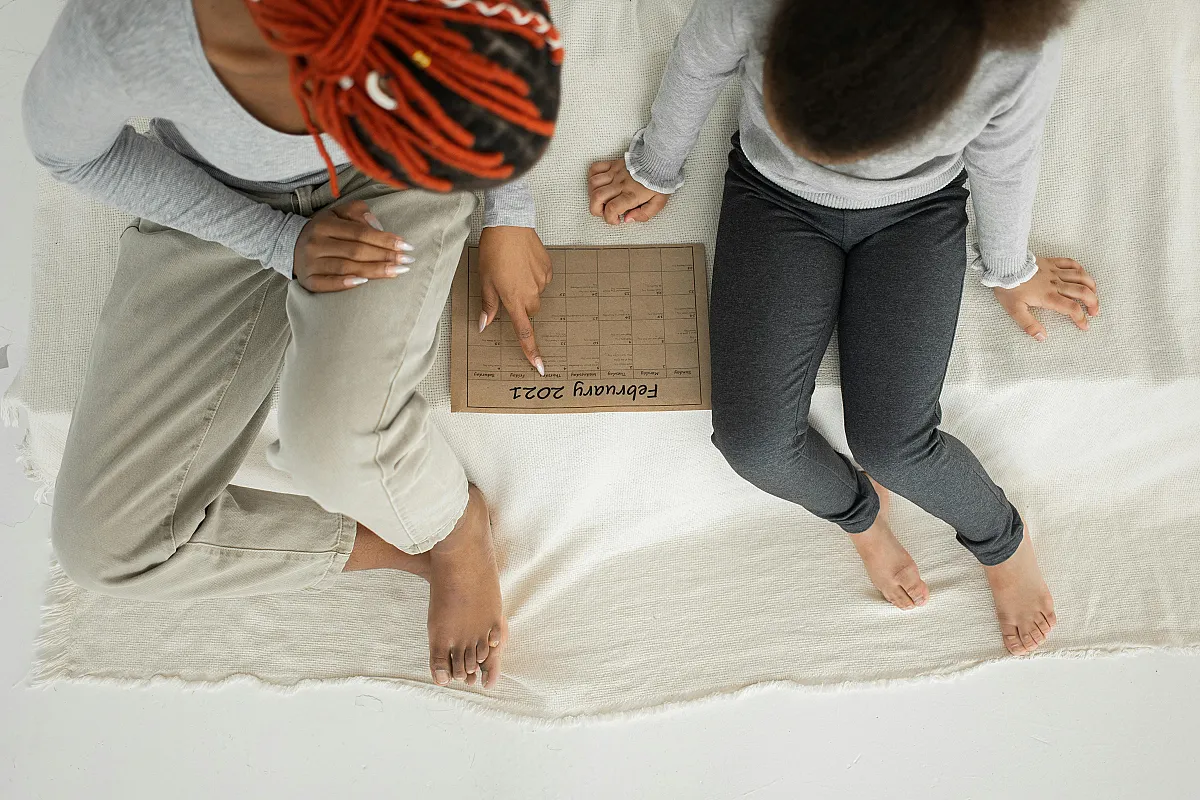
To make the school year go smoothly and without stress, you need to teach your child how to manage their time properly. We have prepared simple tips and a step-by-step plan for you, thanks to which your child will quickly and easily master time management.
The beginning of the school year is a challenging time. During the holidays, children relax and then find it difficult to get back into the work routine. From this article, you will learn how, using time management, to ensure your child has high academic performance, a good mood, normal sleep, and excellent well-being.
The task of time management for schoolchildren is to eliminate the unnecessary and focus on the essential.
Where to start?
Before moving on to time management, you need to prepare your child. And here, psychological attitude and the presence of useful habits are very important. Read here about how to easily and simply form useful habits in children.
Start talking about time
Talk about how quickly it flies and how important it is to use it correctly. Try to make sure your child understands what you want to convey: "If you do your homework in 1.5 hours, you will still have time to go for a walk with friends or do your own things."
Discuss the past
Sometimes children confuse the sequence of events, and because of this, they lose their sense of time. In the evening, ask your child how their day went. For example: "What interesting things happened at school yesterday? And today? Did they give more homework today than yesterday?" etc.
Teach them to be orderly
Getting ready for school will be faster if the room is tidy. Teach your child to neatly fold their clothes and school supplies, then every morning will be easy and stress-free.
Use helpers
The best way to teach a child to feel and sense time is to use clocks and timers. For example, suggest that your child do their homework with a timer: 15 minutes of study - 15 minutes of break, and so on until the homework is completely done.
At first, doing homework may stretch over several hours, and the child will not have any free time left. But soon they will understand that it is better to cope without breaks and will start doing homework faster.
Teach them independence and responsibility
As we already wrote in the article "Children and gadgets: how to turn addiction into a benefit," it is necessary to allow the child to independently track the time they spend on entertainment. By fostering responsibility, we help children learn to set priorities and use time rationally.
Find and eliminate time "killers"
This is the second step after preparation!
Most often, children don't have time for anything because they:
- don't get enough sleep and take a long time to get going in the morning;
- can't find anything and take a long time to get ready;
- get distracted from their lessons and get stuck on gadgets;
- don't finish tasks and return to the same task several times.
Observe and determine where your child's time goes
If, for example, the mess is to blame, say that if they clean up, they will get a reward. Use motivation and encouragement.
The next recommendation is about motivation.
Motivate
For a child, the time management process should be fun. If it's a task planner, it should be bright, colorful, and with stickers.
If it's about learning, and you don't know how to interest your child in a particular subject, think about presenting the material in an interesting way. For example, watch an educational video on YouTube, play a game, or visit an experimental museum.
Then the child will have a positive attitude towards the new subject from the very beginning and will not be afraid of it at school.
Determine your child's productive time
It's simple here. Want your child to handle their lessons faster? Determine their productive time. It's clear that it's hardest for night owls to do homework in the morning, and for early birds in the evenings. By focusing on your child's biorhythms, you will double their productivity. And that means they will handle tasks faster.
10 tips on how to teach your child planning
While your child is not yet able to organize their time on their own, build plans together with them.
1. Make a plan of tasks for the week
This should include all the child's activities and tasks after school: doing homework, clubs, active recreation, joint shopping trips, etc.
2. Sort tasks by type and highlight the main ones
For example, homework, clubs, helping around the house, etc. Write down what the child should do first and what can wait.
3. Break down complex tasks into stages
For example, the child needs to clean their room. The large amount of work may scare them. Make a list of what specifically needs to be done and suggest they cross out each action: water the flowers, dust, fold clothes, notebooks, and books, etc.
4. Estimate how much time the child spends on each task
This way, you will understand how to better distribute tasks throughout the day so that they don't get tired.
5. Leave spare time
With children, things often don't go according to plan, so add 10–20 minutes of extra time to each task.
6. Plan tomorrow's day in the evening
Every evening, make a plan for the day with your child. Help them prepare clothes for tomorrow, pack their school bag, remind them about clubs, etc.
7. Teach your child to visualize tasks
For this, you can use a kanban board. Heard of it? Kanban is a Japanese expression that has several meanings. One of them is a way to visualize tasks to complete them on time.
For the base, you can use poster board, plywood, corkboard, or magnetic board. Hang it on the wall and divide it into columns: "to do," "in progress," "completed."
Then, on separate sticky notes, distribute all the tasks the child needs to do—write each task separately.
Bright sticky notes will interest the child more than a simple entry in a diary. Thanks to this method, they will quickly become more organized, learn planning, and do it themselves with pleasure.
8. Reward for tasks completed on time
Anything can serve as a reward, even simple praise. The main thing is that you acknowledge the child's efforts.
9. Plan weekends
Explain to your child that you need to plan not only the workweek but also the weekends. After all, it's much better to organize your rest so that as many pleasant activities as possible fit into one day.
Start using our tips as early as possible. The sooner your child starts managing their time wisely, the better they will study and grow up confident and purposeful.


Leave a Comment