

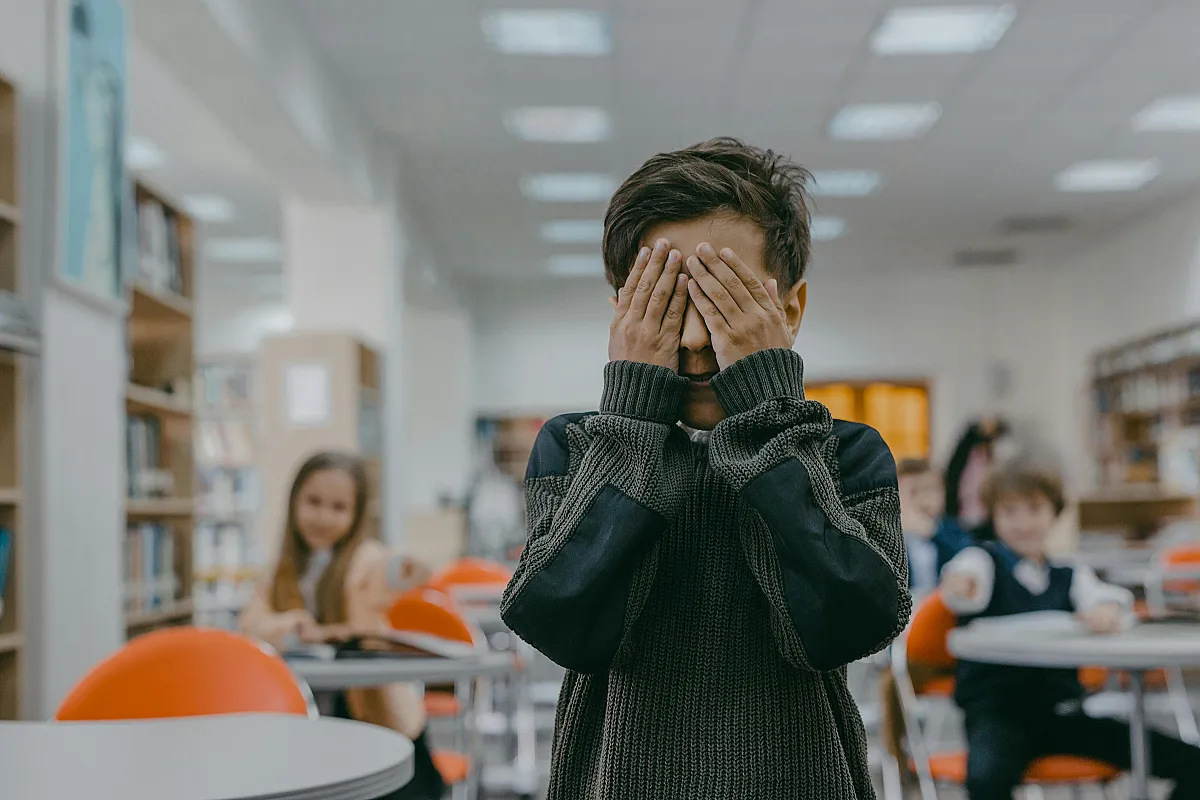
Bullying is bullying, aggressive harassment and bullying of one of the members of the team. According to the WHO, more than 40% of schoolchildren are bullied, most often in primary and secondary schools.
Why is there bullying?
The vast majority of children need a sense of group cohesion. It is very good if the adult responsible for the team, for example, a teacher, creates positive grounds for this need - common interests, games, competitions, classes, trips, etc.
If the adult does not explain the rules of existence in the group, and the children came, unlearned and separated, their need to be part of the group is not satisfied. In this case, sooner or later they unite themselves, but against someone.
Bullying participants
Buller - aggressor, initiator of bullying
More often they are children who have faced domestic violence, experienced traumatic moments in the past or are prone to vanity, narcissism. School bullying is a way for them to assert themselves, to take out anger and pain, to ridicule another to hide their complexes and fears.
The victim is a child who is being bullied.
The victim can be a sensitive child, overly emotional, stand out, or quite ordinary, quite beautiful, intelligent and talented.
It is important to understand that any child can become a victim of bullying. Because the reason for bullying is not in him and his shortcomings.
Observers are witnesses of bullying
These are followers of the aggressor, silent witnesses, and potential defenders of the victim. The largest group in which everyone gets their own psychological trauma.
Often, children can neither accept the situation nor solve it, are afraid to be in the place of the victim, suffer from the kind of violence that continues for a long time, their own powerlessness and betrayal of their values. In the future, children with “witness trauma” are afraid to speak their mind, go against the majority, stand out and be proactive.
Adult mistakes
When the group has appointed a victim and built up on violence, it will remain so. The children's group cannot stop on its own. Adult intervention is needed. But the intervention is right.
First of all, we will tell you what not to do:
Wait for it to pass.
Children under 12 years old have poorly formed concepts of morality – the brain is not yet ripe for this. Therefore, it is important that adults set the right guidelines. At this age, children are ready to accept them.
Calling bullying in school a simple conflict
- Conflict is a one-time phenomenon, bullying is regular, occurring from day to day.
- Conflict is short-lived, fast and bright, like a flash. For example, a fight, after which children can reconcile. Bullying can last for years.
- Conflict occurs between equal-powered participants, for example, two children do not share toys. Bullying is a long-term bullying of the same victim (the victim remains unchanged, no matter what he does), while there is no question of any equality of forces - the aggressor is always much stronger.
Justify school bullying
Even if the victim is a classic “white crow” and the aggressor is the first student in school, every child’s rights to protection are the same. There is no excuse for bullying.
Blame the victim
You come to work and no one says hello to you. All day long you hear laughs behind your back, your belongings get dirty and stolen, and important documents you find spoiled in the toilet. It happens every day. At some point, the bowl overflows, you break off and scream, after which you immediately find yourself in front of the authorities. “You need to be able to get along with the team!” they tell you. That's what the victim experiences.
The first thing to know about bullying is that the victim is not to blame. Bullying is not because someone is not handsome, gifted, athletic, etc. If the double victim becomes an excellent student, he will simply be renamed "nerd". If the victim moves to another school, another child will take her place within weeks.
Bullying is happening because the collective has come together in such a distorted, wrong way. And telling the victim “it’s your fault, just become beautiful, gifted, athletic”, adults shift on the child an unbearable responsibility – both for the occurrence of bullying and for stopping.
Talk to the bully's parents, press the aggressor's pity and threaten him
Talking to the aggressor’s parents is ineffective. Some will protect their children. Others will be punished (the next one will be the victim). Others will blame you and your child. The fourth will do everything listed in order.
It is ineffective to threaten a bully or explain that the victim is ill. This will bring exactly the opposite result – strengthen the aggressor in a position of strength, and humiliate the victim even more.
Don’t ask your child to flirt with bullies or solve the problem with retaliatory violence.
There are two extremes of bad advice: “Learn to build relationships” and “Keep fighting back!” Both messages mean: “Clean yourself, no one will help you.”
What to do to a parent if the child is faced with bullying
Discuss the situation.
The victim is not a snout. On the contrary, children who have been bullied at school usually endure to the last. Your job as an adult is to calm down, not to express panic, nervousness or fear.
Tell your child what bullying is. Assure that he is not guilty of anything and together you will solve this problem – the child is in dire need of a sense of security.
Plan your solution. Discuss where attacks often occur and how these places can be avoided. If you can not avoid, think about how to make the child appear in them exclusively with friends. Warn that you will go to school for a trial.
Contact the person responsible for the team
Since school bullying is a collective problem, it should be solved with an adult who is responsible for this team. With a teacher, a class leader. If they refuse to call the situation bullying, justify the behavior of the aggressor or accuse the victim, go to the headmaster and the director. And they can't hear? Go to higher authorities. Remember that every day in a team where bullying happens is a new trauma for children.
When visiting school, try not to catch the eye of the class – children should not know that you are interfering. Do not take your child to talk to a teacher or director. He should not hear the possible flow of “it is his fault.”
Find out how the teacher will solve the problem.
If he doesn’t know what to do in this situation (and this happens quite often), ask him to study the issue as soon as possible. Agree that in case of bullying, the child will always be able to contact him for help.
Bring your child to a psychologist
If you feel that you can not cope on your own and the child needs professional help, be sure to contact a specialist.
Give your child confidence.
This is the best protection against bullying. Help your child find a team that will be comfortable and he can find friends.


Leave a Comment