

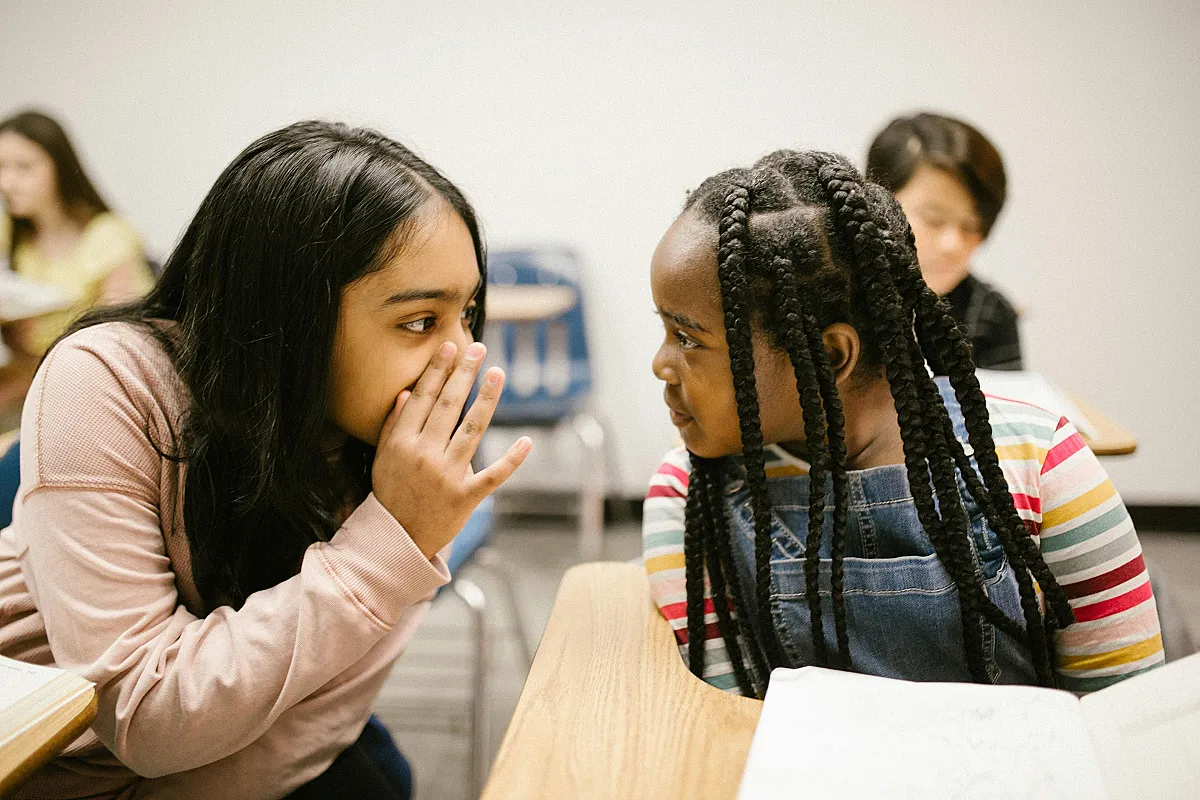
Sometimes a child seems to not argue, not shout, does what is asked, but something constantly goes wrong. They seem to intentionally ignore important things, do things carelessly, arrive late even though they "tried very hard not to be late," or silently express offense. There is no open conflict, but tension grows.
Many adults at this moment think: "Is he mocking me?", "Is she manipulating?", "Is he deliberately provoking me?" But often behind such behavior is not malice, but passive aggression—a subconscious way of expressing feelings when openly getting angry, offended, or arguing is difficult or scary for various reasons.
In this article, you will learn:
— what passive aggression is and its signs in children and teenagers;
— why a child might choose passive aggression instead of an open conversation;
— how to respond gently without blaming yourself or the child;
— what can be done at home and at school to make it safe for the child to express any emotions.
What is passive aggression: explained in simple terms
Passive aggression is not about "bad character"
Passive aggression is a way of expressing anger, resentment, or disagreement not directly, but through indirect actions or inaction. Outwardly, the child may seem calm, even obedient, but their actions, tone, and behavior say otherwise.
If we put it very simply, passive aggression is when I am angry but cannot (or do not know how) to talk about it openly. Then the tension comes out in the form of:
— "accidental" forgetfulness;
— deliberate slowness;
— sarcasm, biting jokes;
— stubborn silence;
— refusal to cooperate, even though verbally they agree.
This way of reacting often arises unconsciously. The child does not sit and plan: "Now I will be passive-aggressive." They simply choose the only way available to them at the moment to protect themselves, express dissatisfaction, or regain a sense of influence over the situation.
Why passive aggression is so hard to notice
Open aggression is immediately noticeable: shouting, rudeness, slamming doors. Passive aggression is much quieter. Adults often only see the result: "He didn't do it again," "She locked herself in her room and is silent again," and feel irritation or helplessness.
The difficulty is that:
— outwardly, the behavior may seem lazy or absent-minded, even though strong emotions lie behind it;
— the child themselves finds it difficult to understand and name what is happening to them;
— parents may not connect forgetfulness and silence with recent conflicts, tense situations, or family rules.
Passive aggression: signs in children and teenagers
Main signs of passive aggression
Not every act of resistance is passive aggression. Children in general need to try to stand up for their opinions, practice "I can do it myself." This is part of development. But there are certain signs that can indicate passive aggression.
Below are typical manifestations. Remember that one sign alone does not prove anything. Look at the overall picture, frequency, and context.
1. "Agreed and didn't do it"
The child nods, says: "Yes, right now," "Of course, I'll do it," but in reality, the promises are not fulfilled. There are no visible reasons for this, and reminders cause offense. The statement "I forgot" is heard too often.
2. Delaying and slowness as if on purpose
For example, getting ready for kindergarten/school suddenly slows down precisely when you asked to hurry. Or a teenager leaves the house for practice at the last minute, even though they know you worry about being late.
The internal message might sound like: "Since no one considers me, I will at least show this way that I don't like it."
3. Irony and biting jokes
The child seems to be joking, but the jokes hit where it hurts. "Well, yes, I'm the laziest one to you," "You're always right," "Of course, no one cares about my desires."
Saying directly: "It hurts when I'm criticized," is difficult, but a joke allows them to speak up and hide at the same time: "What, I was just joking."
4. Offended silence, ignoring
With passive aggression, the child stops talking, avoids eye contact, responds in monosyllables, and coldly. They clearly withdraw, "freeze" in interaction, and may demonstratively go to their room.
Here, aggression is expressed through distance.
5. Hidden resistance to rules
The child does not openly argue with the rules at home but constantly looks for loopholes. Or they do everything "their own way," but in a way that makes it difficult to make claims: "I didn't do anything wrong." They may fulfill requests minimally, formally.
This may be a way to preserve a sense of freedom where the child feels controlled.
6. Sabotaging common plans
On the day of an important event, they suddenly forget to prepare, ruin the mood of the whole family before a trip, or in a group, they start slowing down the common task, even though verbally they are "for it."
Often, this expresses an accumulated sense of injustice or unspoken "no one listens to me."
How passive aggression manifests at different ages
Preschoolers (under 6 years old)
In young children, passive aggression takes simpler forms. The child intentionally drops or breaks toys/objects but says it was an accident; demonstratively slows down when it's time to get ready; may use the phrase "I don't want to and that's it" without attempting to explain what exactly they don't like. Especially if they fear that an honest answer will be judged.
If a child is often forbidden to get angry, express strong emotions, or cry, they understand that expressing their feelings is unsafe—but they haven’t yet learned another way to cope with anger.Younger schoolchildren (7–11 years)
At this age, subtle forms of passive aggression emerge:
— constant "I forgot" about homework, belongings, or responsibilities;
— minor mischief that’s hard to prove;
— sarcastic comments directed at parents under the guise of jokes.
Teenagers (12–17 years)
Teenage passive aggression often looks like:
— silent protest—pretending not to hear when addressed, ignoring, including messages from parents;
— sarcasm, devaluation ("You don’t understand anything");
— agreement to external control ("Fine, whatever you want"), followed by secretly breaking agreements.
Why passive aggression arises: possible causes
Passive aggression is not a child’s "spoiled nature," but a signal
When discussing passive aggression in children, it’s important to avoid labels. A child with passive-aggressive behavior is not a manipulator. Often, they simply experience strong emotions they don’t yet know how to handle, fear the consequences of openly expressing anger or disagreement, and may feel unheard or powerless.
Let’s consider some common causes.
Ban on anger and other "inconvenient" emotions
One of the most frequent causes is an implicit or direct message to the child that anger is not allowed. For example:
— "You can’t be angry at me, I’m your mother";
— "Boys don’t cry";
— "Be good, don’t talk back to adults."
The child learns that anger is bad, resentment is weakness, and dissatisfaction is unsafe. They start thinking that their emotions might lead to rejection or punishment.
But emotions don’t disappear. If they can’t be expressed directly, the mind finds a workaround. This is how passive aggression emerges.
Fear of punishment or conflict
In families and groups where hierarchy is strongly enforced (the elder is always right), where expressing disagreement leads to yelling, punishment, or shaming, and conflicts are ignored or silenced, children may develop the belief: "Speaking openly about what I dislike is dangerous."
Then a strategy emerges: "I’ll appear obedient on the surface but show my dissatisfaction covertly. This way, I’ll preserve my boundaries and avoid direct punishment."
Experience of emotional invalidation
Examples of phrases adults might say automatically:
— "It’s nothing, why are you crying";
— "Others have it worse, and you’re sad";
— "Don’t be so dramatic."
For a child, this means: "My feelings don’t matter," "No one understands me," "It’s better to stay silent."
The emotion remains inside, but the need to be heard doesn’t disappear. Passive aggression becomes a way to assert themselves, even if only slightly.
Inconsistency and mixed messages
When adults:
— allow anger and arguments one day but punish the same behavior the next;
— say, "You can speak your mind," but get angry or offended by honest answers;
— demonstrate passive aggression themselves (silent treatment, resentment),
the child gets confused. "What’s allowed and what isn’t?" In such uncertainty, it’s safer to avoid direct aggression and use veiled forms instead.
Lack of safe models for expressing anger
If a child hasn’t seen adults verbalize their emotions, acknowledge them, discuss conflicts without yelling or punishment, or apologize, they may simply lack ready-made models for handling anger differently. They feel anger but don’t know how to process it constructively. Passive aggression becomes the default model, often copied from family, surroundings, or media.
Overload, fatigue, stress
Sometimes passive aggression intensifies due to:
— high academic workload;
— conflicts with peers;
— changing schools or kindergartens;
— family changes (divorce, moving, birth of a sibling).
In a state of chronic stress, it’s harder for a child to control their reactions, notice, and verbalize what angers them in time. Then automatic, less conscious methods—including passive aggression—kick in.
How to distinguish passive aggression from other states
Not every "doesn’t do" or "doesn’t answer" is passive aggression. Similar behavior can stem from:
— heightened anxiety—the child fears making mistakes, procrastinates, "freezes";
— attention difficulties (e.g., ADHD)—often forgets because it’s hard to maintain focus;
— depressive state—low interest, little energy, hard to concentrate;
— sensory overload—the child genuinely struggles with daily tasks.
If behavior changes abruptly, accompanied by sleep or appetite disturbances, somatic complaints (stomachaches, headaches, etc.), discuss the situation with a specialist—a doctor or child psychologist.
Three key questions for adults
To determine if you’re truly dealing with passive aggression, ask yourself a few questions.
1. Does the child have a reason to be angry or upset that’s hard to discuss openly: lack of personal time, disagreement with family rules, etc.?
2. Does "forgetfulness" and slowness manifest more often in situations related to stressful topics: school, household chores, routine?3. Does similar behavior manifest in relationships with other significant adults: teachers, coaches, etc.?
If the answer to most of these questions is "yes," what is happening can be considered a possible form of passive aggression, and it should be handled with care.
Why It's Important to Allow a Child Any Emotions
Emotions Are Neutral; Only the Ban on Them Is Dangerous
Anger, resentment, irritation, envy—these are a normal part of a person's emotional life at any age. Emotions themselves are not harmful. What matters is how we express them.
When a child is told not to be angry, not to cry, not to be offended, they hear: "There's something wrong with you when you feel this way."
This leads to difficulties in understanding their own emotions, tension that later erupts in passive aggression or sudden outbursts, as well as future difficulties—in close relationships and at work.
Allowing Emotions ≠ Allowing Any Behavior
Sometimes adults fear that if a child is allowed to be angry, they will become spoiled and their behavior will suffer.
Here, it's important to understand that emotions are always normal: "You can be angry, offended, upset, envious, scared. Any feelings are acceptable."
But behavior is negotiable and limited: "I don't agree with you hitting or insulting others. Let's find another way to express what you're feeling."
This approach helps the child not feel ashamed of their experiences, learn to express emotions in a healthy way, and resort less to passive aggression because there is space for honest dialogue.
What a Supportive Message to a Child Sounds Like
Examples of phrases that help:
— "You have the right to be angry; let's figure out what upset you the most";
— "I see that you're offended. I'm here when you're ready to talk";
— "You're very upset right now, and you're angry. Let's think about how you can show this without harming yourself or others";
— "Your opinion is important to me, even if it differs from mine."
Such messages reduce the need to express protest covertly—passive aggression simply becomes unnecessary.
How to Respond to Passive Aggression: A Guide for Parents
Don't Look for Someone to Blame; See the Need
First, instead of asking, "Who is to blame for the child behaving this way?" and "How can we stop this quickly?" it's more useful to ask other questions:
— "What is he trying to show with this behavior?"
— "What feelings are behind what I'm seeing?"
— "In what situations is it especially difficult for him to speak directly?"
Notice Not Only the Behavior but Also the Context
Next, we look broader: where does this behavior repeat:
- — only at home or also at school, in extracurricular activities;
- — only with one parent or with all adults;
- — only in connection with specific topics (lessons, screen time, chores) or not.
Separate Facts from Interpretation
For example, fact: "The homework hasn't been done for two days, even though we agreed you would do it yourself."
Parent's interpretation: "You're deliberately trying to upset me."
For dialogue, it will be more important to rely only on facts.
Create Space for a Safe Conversation
1. Choose the right moment: it's better to talk in a calm environment, without rushing.
2. Define your position. You can rely on the formula:
- — "I see..." (behavior);
- — "I feel..." (your emotions);
- — "I want to understand what's happening with you."
For example: "I see that with homework, it often happens like this: you say you'll do it, but it remains undone. I feel tired and confused. I want to understand what's stopping you, what you feel in those moments."
3. To make it easier to maintain contact in the dialogue, you can prepare "Pocket Phrases of Support" in advance:
— "It's important for me to understand you";
— "You can speak honestly; I won't scold you for your feelings";
— "I need time to think about what you're saying, but I hear you."
Talk and Try New Ways
1. Name possible feelings but don't impose them: "Maybe you get angry when I ask you for help, but you have your own plans? Does that happen?", "Could it be that you're offended when I talk about grades?"
If the child says, "No, I'm not angry," you can respond: "Okay, maybe not anger. What do you feel when this happens?"
2. Acknowledge the child's point of view even if you disagree, then discuss boundaries and agreements specifically.
Instead of general phrases ("Be more responsible"), be specific: "Let's agree that you do math before dinner. If it's difficult, call me, and we'll find a solution together. I won't scold you for mistakes, but it's important to me that you honestly say if you're struggling."
3. Offer alternatives to passive aggression.
— Speak openly: "Mom, I'm angry right now because you didn't warn me," "Dad, this method doesn't work for me; can we discuss another one?"
— Use "I-messages": "I get angry when my things are taken without asking," "I get upset when jokes are made about me in front of everyone."
— Agree on a "pause signal." For example, the child can say, "I need time," if they feel they're about to yell or resort to passive aggression. The adult responds: "Okay, let's take a break and come back to the conversation."
Support Every Day
1. To support a child, you can regularly talk about feelings. For example, instead of "How are you?" ask: "What made you happy today," "what made you angry or upset today?"2. You can jointly find ways to express aggression and other emotions ecologically:
— hit a pillow when a situation is very frustrating;
— stomp your feet, crumple paper, draw your anger;
— write an "angry" draft of a message (which you don’t have to send) to release the emotion.
3. Be a personal example and experience, verbalize feelings: "I'm angry right now because I'm tired and didn't get to rest. I need 10 minutes of silence, then I can talk," — and also admit mistakes.
4. Establish predictable rules and discuss them in advance, not during a conflict.
5. Be in a soft but strong position. The child should understand that they won’t be shamed for an honest conversation, but their behavior will have consequences.
Checklist for parents and educators: what helps reduce passive aggression
Mark what is already present and what can be added:
1. I try not to forbid the child from having emotions but help them name them.
2. My speech rarely includes phrases like "Don’t be angry," "Stop being offended" — I replace them with "Tell me what upset you so much."
3. I don’t dismiss the child’s feelings ("It’s nothing," "Don’t make things up"), even if the situation seems insignificant to me.
4. I try not to shame the child for their tears, fears, or anger.
5. We have clear, understandable rules and agreements, not just spontaneous bans.
6. I let the child know that their perspective is important, even if I ultimately make the decision.
7. In conflicts, I avoid threats and yelling as much as possible; if I lose my temper, I acknowledge it and discuss it.
8. I monitor my own passive-aggressive reactions and try to find other ways to express emotions.
9. If something in the child’s behavior concerns me, I am ready to seek advice from a specialist.
Frequently asked questions about passive aggression in children and adolescents
Is passive aggression always about family problems?
Not necessarily. Personal experience, peer relationships, and overall stress levels also matter. Family atmosphere is an important factor but not the only one. Instead of looking for someone to blame, it’s more useful to look at the situation comprehensively and ask what can be changed now to make things easier for the child.
Can passive aggression be completely eliminated?
Completely — unlikely, and there’s no need. Passive aggression is one of the possible ways to react, which sometimes occurs in everyone. Our goal is not to eradicate it but to ensure the child has other, more open and safe ways to express emotions. Then passive-aggressive reactions will occur less often and won’t harm relationships.
Should passive aggression be punished?
Punishments rarely help because passive aggression often arises from fear of punishment or a ban on emotions. If you only react with sanctions, the child will likely retreat even deeper into hidden forms of protest. It’s more effective to set boundaries, discuss the consequences of specific actions, and simultaneously help the child learn to talk about their feelings directly.
How to explain passive aggression to a child?
With older children, you can say:
"Sometimes we get angry and instead of saying it, we start doing things out of spite or, on the contrary, not doing what’s important to others. That’s passive aggression. It doesn’t make a person bad; they just don’t know another way. Let’s find ways to express anger differently together."
With younger children, you can use fairy tales, stories, or drawings about characters who express emotions in different ways.
Conclusion
Passive aggression in children and adolescents is not bad behavior or manipulation but one way of coping with feelings. Behind silence, forgetfulness, sarcasm, or resistance often lie confusion, fear of being misunderstood, and a need for acceptance.
A caring response, clear boundaries, and support are an investment in the child’s emotional literacy and your relationship for years to come. The small steps described in the article can be started today: noticing feelings, naming them, and creating space for dialogue at home and at school.
If this text was helpful, share it with those who need to better understand children and adolescents — parents, educators.
The material is based on the following sources:
- Roger L. Aggression and aggressiveness in interpersonal relationships // Psychological Journal. — 2003. — Vol. 24, No. 2. — P. 45–57.
- American Psychiatric Association. Diagnostic and Statistical Manual of Mental Disorders (DSM-5). — Washington, DC: American Psychiatric Association Publishing, 2013. — 947 p.

Leave a Comment