

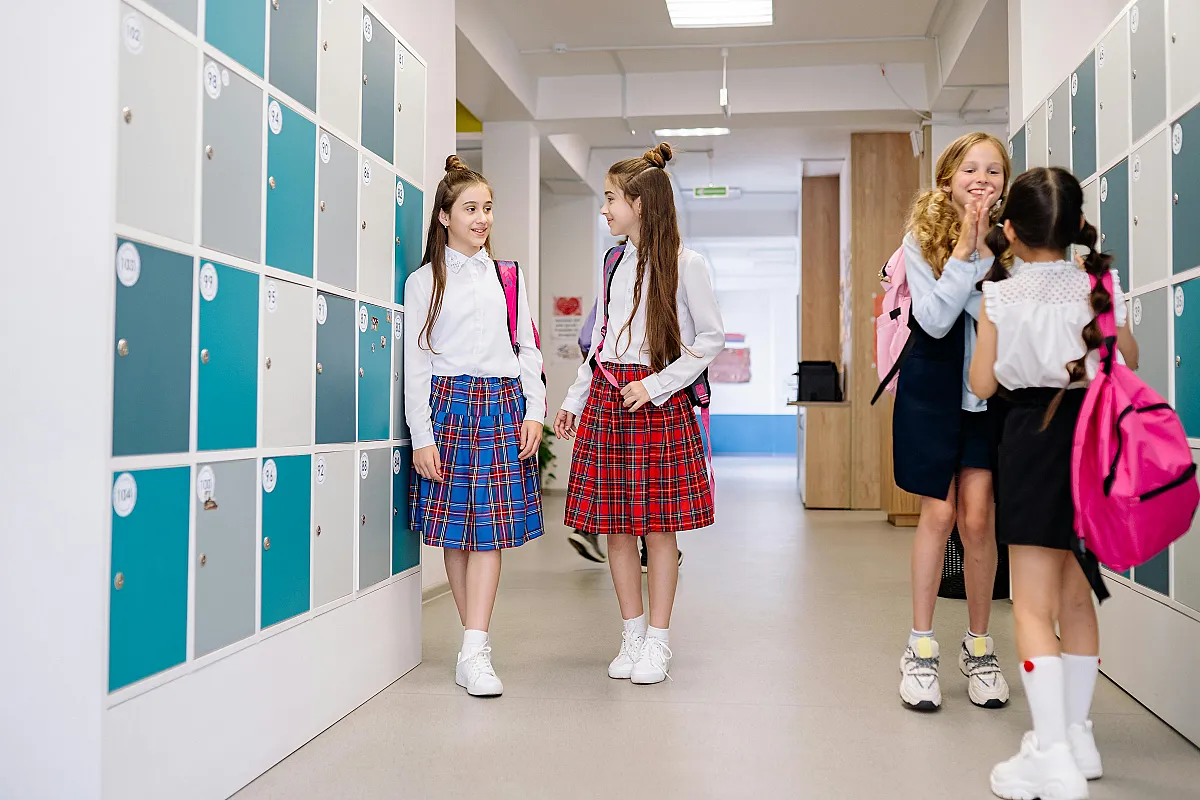
A child does not engage with classmates, argues, breaks rules, and refuses to go to school. Teachers complain, there are remarks in the diary, and tears at home. At some point, adults begin to seek an explanation and encounter the concept of "social maladjustment."
It is important for parents and educators to understand that behind the outward bad behavior, there are often not whims, but difficulties in adaptation: the child simply struggles in social situations and cannot cope with the means available to them.
In this article, we will simply explain:
— what social maladjustment is;
— how social maladjustment manifests in children and adolescents;
— what are the causes and risk factors;
— how to support a child at home and at school;
— when it is better to consult a specialist.
Social maladjustment: what it is in psychology
Basic definition in simple terms
Formally, social maladjustment in psychology is a disruption in the process of a person adapting to the requirements and rules of the social environment.
In simpler terms, social maladjustment is a state where a child experiences persistent difficulties in communication, learning, and adhering to norms and rules.
Important: maladjustment is not a verdict. It can be temporary, for example, when transitioning to a new class, or persistent if adults do not notice the causes and do not help the child for a long time.
How maladjustment differs from character
Sometimes adults say: "That's just their character—withdrawn/quick-tempered/stubborn." But often, this is actually social maladjustment.
The main difference is that character consists of stable personality traits that do not inherently interfere with learning, communication, or living. Social maladjustment is when a child's behavior and internal state hinder them. For example, they cannot form and maintain relationships, attend school, follow reasonable social norms, or feel safe among people.
If adults regularly notice that a child struggles among peers and other environments, there is reason to look at the situation more broadly than just character.
Areas where social maladjustment in children and adolescents most commonly manifests
Psychologists identify several key areas where it is especially noticeable whether a child has difficulties with adaptation:
— academics and school life—completing assignments, relationships with teachers, discipline;
— peer interaction—friendships, games, inclusion in the group;
— family relationships—contact with parents, boundaries, willingness to share experiences and emotions;
— free time—interests, hobbies, leisure activities.
If a child consistently struggles in one or more of these areas, we can speak of signs of social maladjustment.
How social maladjustment manifests in children and adolescents
Typical signs of social maladjustment in behavior
Social maladjustment in children can appear in different ways, but there are common patterns in how it most often manifests.
1. Withdrawal and isolation:
— the child avoids communication, does not want to go to school or group events;
— sits alone during breaks, does not join games, refuses to participate in group activities.
2. Aggression and conflicts:
— easily gets into conflicts, quickly becomes angry, shouts, fights, throws objects;
— actively argues with teachers, ignores rules.
3. Anxiety and avoidance:
— fears answering at the board, making acquaintances, or speaking in public;
— may cry or "freeze" when needing to interact with others.
4. Provocative behavior:
— responds rudely to remarks;
— intentional shock tactics—provocative clothing, statements, deliberate disruption of order.
5. Loss of interest in studies and activities:
— chronic "didn't do it," "forgot," "didn't have time";
— lack of motivation despite preserved abilities; the child says, "It won't work anyway, and the teacher will nitpick."
6. Frequent mood swings:
— from excitement and cheerfulness to tears and aggression throughout the day;
— "swings" depending on the reactions of peers and adults.
Examples from life
First example: An eight-year-old boy transferred to a new school. At first, he was quiet, but then constant conflicts arose during breaks—the child fights and insults peers. Teachers say: "an aggressive child." In reality, he is scared and lonely, and the only way he sees to feel noticed is to provoke a conflict.
Second example: A 13-year-old teenager suddenly stopped attending extracurricular activities, began skipping school, and locked themselves in their room with their phone. Parents think they are lazy. In reality, this is social maladjustment due to bullying in class.
Forms of maladjustment: "quiet" and "loud"
"Quiet" social maladjustment:
— the child is unnoticed, does not conflict, but is also not engaged;
— experiences a lot of anxiety, fears answering, avoids new situations;
— may be successful in academics but unhappy in the group.
"Loud" social maladjustment:
— the child breaks discipline, gets into conflicts, fights;
— demonstrative behavior, verbal aggression;
— formal leadership through provocations, but at the same time — internal tension.Both forms require attention. Adults often underestimate "quiet" children, thinking that "if they don't misbehave, everything is fine."
What lies behind maladaptation: main causes
Social maladaptation is a consequence, not a root cause. It is a signal of difficulties that the child cannot cope with.
Among the common causes of social maladaptation:
1. Sudden changes in life:
— moving, changing schools or classes;
— parents' divorce, the appearance of a new family member;
— loss of a loved one.
2. Health and development characteristics:
— learning difficulties — reading, writing, counting;
— nervous system characteristics — rapid fatigue, increased excitability;
— developmental delays or characteristics that make communication difficult.
3. Parenting style in the family:
— excessive control, harsh punishments, no right to make mistakes;
— complete permissiveness without boundaries and rules;
— emotional coldness, lack of attention and support.
4. School and social factors:
— unsafe classroom climate — mockery, bullying;
— excessive academic demands, constant criticism.
5. Child's personal experience:
— traumatic situations in the past — abuse, humiliation;
— failures after which the child stopped believing in themselves.
Social maladaptation is "an attempt to adapt as best as I can"
From a psychological perspective, social maladaptation is adaptation "at any cost," when a child uses the strategies available to them at the moment:
— aggression — to defend themselves or regain control;
— withdrawal — to avoid feeling pain;
— demonstrativeness — to gain attention and recognition in any form;
— denial of rules — to avoid confronting feelings of their own "inadequacy."
When viewed this way, the child ceases to be a problem. They become a person who needs help to learn other, safer, and more successful ways of interacting with people.
How to determine if it is social maladaptation and not a temporary crisis
Three criteria to consider
1. Duration:
— minor behavioral changes after events (illness, change of teacher, holidays) are normal;
— if difficulties in communication, studies, and following rules persist for several months and worsen, it is worth considering possible maladaptation.
2. Scope of manifestations:
— a one-time conflict with a classmate is part of life;
— if problems are observed in different areas (school, home, friends, extracurricular activities), the likelihood of social maladaptation is higher.
3. Child's suffering:
— if the child often says they are not needed by anyone, that everything is bad, has become less joyful and interested in things, this is a serious signal of social maladaptation.
Checklist for parents and educators
Mark how many statements apply to your child/student:
[ ] avoids classmates, prefers to be alone;
[ ] often becomes involved in conflicts, arguments, fights;
[ ] regularly skips school, extracurricular activities without objective reasons;
[ ] complains that they are not accepted, not understood, or offended;
[ ] academic performance has sharply declined, even though their abilities allow them to study well;
[ ] often says or shows that "nothing will work out";
[ ] the child has a persistent fear of performances, communication, school, or extracurricular activities;
[ ] behavioral changes persist for a long time — more than a month or two and longer.
If you have marked several points, it makes sense to observe the situation more closely and discuss it with a specialist: a teacher, psychologist, neurologist — depending on the context.
What parents can do: support at home
Start with contact
The first thing that helps a child with social maladaptation is the feeling of stable support in the family.
Useful steps:
— set aside daily time for calm communication with the child — without remarks, reproaches, or strict discussions;
— ask open-ended questions — "How did you feel today in class?", "Was there a moment when it was especially unpleasant?";
— refrain from blaming the child, do not reproach them for their behavior.
Important message: "You are not alone. We will figure it out together."
Name feelings and help cope with them
Many children in a state of maladaptation cannot accurately describe what is happening to them. The adult's task is to help translate behavior into the language of feelings.
Phrases that can help:
— "It seems you were very offended when the kids treated you that way";
— "Were you angry when the teacher made a remark in front of everyone?";
— "I think you are confused now and don't know what to do."
When a feeling is recognized and named, the child gets a chance to seek other ways of behaving besides aggression or withdrawal.
Support self-esteem and rely on strengths
Social maladaptation is often accompanied by the child's beliefs that they are bad/cannot cope with anything, etc. Adults can soften this feeling.
What can be done:
— acknowledge even small successes — "I noticed you approached a classmate to talk after class today, that's great";— emphasize effort, not just results — "You worked hard to solve this problem, that's important, I'm proud of you";
— help the child see their strengths — neatness, sense of humor, kindness.
Create safe social "islands"
If, for example, school is difficult right now, it's important for the child to have places where they feel accepted:
— a small interest group;
— one-on-one activities, such as a tutor/coach for a favorite hobby;
— family — a warm environment and time together.
The adult's task is to gradually expand the child's social experience, starting with the safest conditions.
The role of the teacher: how school can help
What is important for the teacher and class leader
Teachers are often the first to notice signs of social maladjustment in a child: disciplinary issues, difficulties in the group, alienation.
A supportive teacher's position can greatly change the situation. First, it's important to see behavior as a signal, not the child as a problem. Second, discuss difficulties with parents without blame:
— describe specific observed facts;
— speak in the "we" format — "Let's think about how to help."
And third, consider the child's characteristics:
— give clearer instructions if necessary;
— reduce the number of public remarks;
— support during board answers, group work, etc.
School practices that reduce maladjustment
1. Class hours and communication and soft skills training: "I-messages," conflict resolution, empathy development.
2. Project and group assignments with role distribution so that each child can showcase their strengths.
3. A supportive classroom climate: regulating teasing, preventing bullying, respectful interaction.
4. Collaboration with a psychologist: individual and group programs to help children with signs of maladjustment.
What to do if you suspect social maladjustment in a child: a guide for parents and teachers
Step one: analyze the situation
1. Observe and record when and in what situations difficulties most often arise, with whom the child struggles to interact, and what happens before and after problematic behavior.
2. Talk to different adults. The picture of what's happening should be gathered from multiple sources, not limited to your own opinion. Parents, teachers, caregivers, and coaches can provide different perspectives.
3. Separate facts from interpretations. For example, fact: "The child fought twice during recess this week." Interpretation: "He is aggressive and does it on purpose." Rely on facts: they prevent overthinking the situation, making it easier to find a solution.
Step two: prepare for changes
1. Try to identify the root cause and formulate a goal. For example: "Help the child adapt to school," "help the child feel more confident among peers."
2. Agree on cooperation with the school or, conversely, with the family. Discuss what each adult can do in their area of influence.
3. Decide if a specialist is needed and which one:
— school psychologist — for situation assessment and initial help;
— child psychologist/psychotherapist — for pronounced emotional difficulties;
— neurologist, psychiatrist — if there are suspicions of developmental issues or serious behavioral disorders (by specialist referral).
Step three: implementation and support
In the family, as we said, regular warm communication and time together, support, and clear home rules are necessary. You can add communication skill development through games, situation discussions, role-playing scenarios.
At school, individual agreements with the teacher, seating in class next to a calmer and more supportive classmate, and gentle regulation of group work are needed.
At the specialist level, individual consultations with the child, family meetings, group sessions, and social skills training can be introduced.
Finally, regularly assess changes from both your perspective and that of specialists. Agree with teachers and psychologists on meetings to discuss progress and their frequency.
Common adult mistakes in children's social maladjustment
1. Labeling.
"Conflict-prone," "lazy," "withdrawn," "uncontrollable" — the child starts to fit the role instead of trying new behaviors.
2. Ignoring "quiet" signals.
If a child doesn't scream or fight, their suffering is easier to overlook, yet internal tension can be very high.
3. Focus only on punishments.
Strict measures may temporarily stop external manifestations but won't address the root cause.
4. Lack of a unified approach.
Parents and teachers act differently: at home, they pity; at school, they harshly punish. The child becomes confused and doesn't understand which rules apply.
5. Expecting a "quick miracle."
Social maladjustment doesn't develop overnight, so it takes time and consistency to change the situation.
Frequently Asked Questions About Social Maladjustment in Children and Adolescents
Is social maladjustment always long-term?
Not always. For many children and adolescents, social maladjustment is a temporary reaction to changes: transitioning to a new class, conflicts, or stressful events. With adult support, a safe environment, and, if necessary, working with a specialist, the condition often improves. It's important to start helping not after a year, but when you already see the first warning signs.
Can a child "outgrow" social maladjustment without professional help?
Yes, if the changes are not too pronounced and the child has supportive adults and a safe peer group. However, with prolonged difficulties, it usually does not resolve "on its own." If you see that the child has been struggling for several months, it's better to consult a specialist at least once to initially assess the situation.
Is social maladjustment a psychological diagnosis?
In psychology and pedagogy, this term is more often used as a description of a state and situation rather than a medical diagnosis. It helps specialists and adults understand that the child is having difficulty adapting to the social environment and that the causes and ways to help need to be found.
How to distinguish social maladjustment from a typical adolescent crisis?
An adolescent crisis is related to self-discovery, so a teenager may engage in arguments, change interests, and distance themselves from parents. However, they are generally able to build relationships with peers, maintain an interest in life and activities. With social maladjustment, the difficulties are broader: pronounced problems in the group, refusal to engage in school activities, etc.
Which specialist should I consult first if I suspect social maladjustment in a child?
You can start with a school or child psychologist—the specialist will assess the situation, help understand how tense the relationships in the group are, and what difficulties the child is facing. If necessary, the psychologist will refer you to other specialists: a neurologist, psychotherapist, or psychiatrist. It's important for adults to act together and not delay seeking help.
Should a child be transferred to another school if they have social maladjustment?
Sometimes changing schools helps, but it is not a universal solution. If the causes of maladjustment are not understood and the child is not taught new ways of interacting, the difficulties may recur in the new group. Transferring should be considered as one of the steps, not the only solution. The decision is best made together with specialists, taking into account the child's characteristics and the situation in the current school.
Conclusion: The Main Points About Social Maladjustment to Remember
Social maladjustment is a signal that a child is struggling among people. It's important not to ignore the signs of maladjustment but to gently and consistently help: at home, at school, and, if necessary, with the involvement of specialists.
When adults understand how social maladjustment manifests and see the child's feelings and needs behind their behavior, everything changes: communication style, expectations, and desired outcomes. Space opens up for dialogue, support, and the development of skills that will help the child feel more confident and comfortable in society.
Share this article with other parents and educators if the topic resonates with you. Most importantly, choose one or two steps from the text that you can start doing today: a calm evening conversation, a meeting with a teacher, or consulting a psychologist. Small changes by adults often become a big step toward helping children feel at home in the world of people.

Leave a Comment