

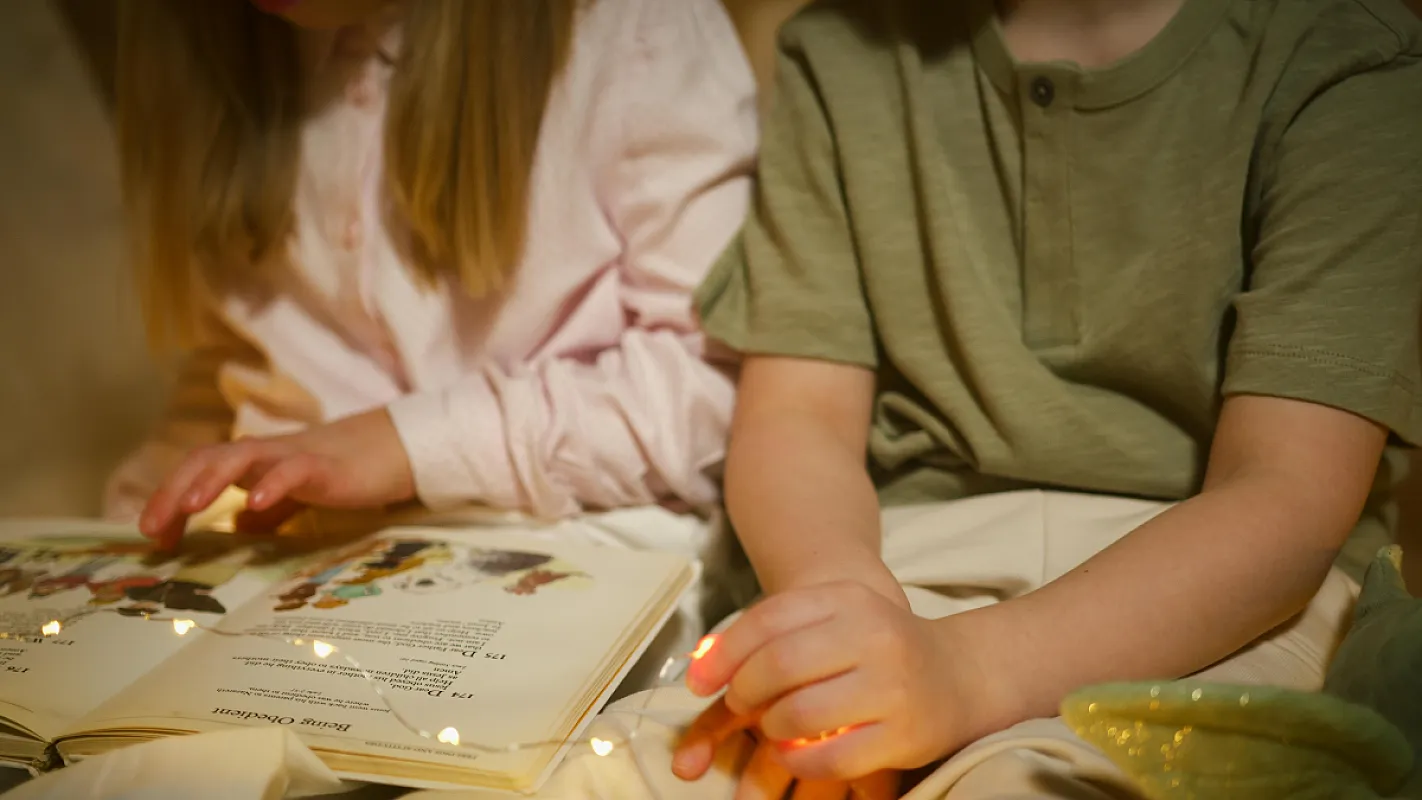
«In kindergarten, my son immediately passed the competition and got into a special group for gifted children. He mastered the elementary school curriculum in 3 years and already had an IQ of 124 at the age of 10. After school, he enrolled in the free department of a prestigious lyceum, where there was a competition of 400 people for 60 places. Then he passed the Unified State Exam and entered a university on a budget.
I don’t know exactly what the reason for my child’s success is, but I think it’s about early reading education. I started working with Anton when he was only 9 months old…»
We came across such a story on one of the «mom’s» forums. But what interested us even more was not the story itself, but the reaction to it. Other mothers were so inspired by one child’s success that they bombarded the author with comments. They thanked her for the advice and scolded the opponents of early development. They said, thank you for dispelling our doubts about early learning.
Of course, every mother wants her child to be able to read by school and absorb the curriculum more easily, but it’s important to understand that not all children are ready for learning from an early age.
In this article, we answer your most popular questions about early reading education.
The earliest age at which a child can learn to read?
A child can be taught to read at the age of 3. Yes, he will indeed be able to read at the level of a schoolchild. But you shouldn’t rush if his brain isn’t mature enough. This is not only a waste of time but also harmful to further development.
Let’s give a simple example. Imagine a 6-month-old baby who can’t sit yet, and you want to teach him to walk. How can you do this if he hasn’t yet formed the special neural connections and developed the leg muscles? Theoretically, you can put him on stilts and let him go. As a result, he will, of course, walk with great difficulty, but he will grow up disabled. Because an important stage in development, responsible for coordination of movements in space, was skipped.
It’s the same with reading. From the perspective of neuropsychology, in children under 6–7 years old, the right hemisphere, responsible for movement, perception, visual and spatial thinking, is actively developing. Therefore, at this age, more attention should be paid to the development of fine motor skills and physical activity.
If you sit a child down to read at the age of 3, this will lead to early stimulation of the still immature left hemisphere at the expense of the right. Since learning letters and symbols at this age suppresses the development of visual-figurative thinking, and in the future, this can lead to lagging behind in studies.
When is it better to start teaching a child to read?
The answer is when the child is ready. In fact, there is no ideal age for mastering the skill of reading. Each person’s brain is individual and develops at its own pace. At each stage of psychophysical development, a child acquires new abilities responsible for certain skills.
Some can easily start reading at 3–4 years old because they will be ready, while others will master this skill only by 10–11 years old, and this is considered absolutely normal. It’s just that the brains of these children develop more slowly, but this in no way affects their abilities.
Based on this, it is more correct to start teaching children to read no earlier than 4–5 years old, when the right hemisphere and subcortical layers of the brain are already practically formed.
What factors influence a child’s readiness to learn to read?
There are general factors that influence readiness to learn to read:
1. Which hand is the child’s dominant hand
Children who are left-handed find it more difficult to learn. If you notice that your child eats, draws, and brushes their teeth more with their left hand than their right, they may be left-handed. In that case, you shouldn’t rush into early reading education.
2. Developed fine motor skills
The earlier and better a child’s fine motor skills develop, the faster they will be ready to learn to read. Because it is fine motor skills that contribute to the development of mental processes, which are so necessary for memorizing letters, numbers, and symbols.
Look at your child. If they can barely handle a spoon, don’t rush into teaching. Start working on fine motor skills.
3. The child’s gender
As is known, girls’ brains develop faster, so they are naturally ready to start learning to read earlier than boys. But again, all children are different, so you shouldn’t rely too much on this factor.
4. Temperament
Calm children find it easier to learn than hyperactive ones. If you have an active child, don’t try to sit them down with a book at the age of 4; let them run, play, and develop. Their time will come. Forcing them can lead to them completely turning away from studying in school. Read more about the influence of temperament on learning in the article: Why a child doesn’t want to study: what are the reasons and what should parents do?
5. Interests
If your child currently prefers drawing or sculpting, don’t try to switch them to reading. Thanks to their favorite hobbies, the necessary connections are formed in children’s brains, which will later help them easily master reading and other sciences.
How to know if a child is ready to learn to read?
Don’t rush things and engage your child in what interests them. Play and observe. And the moment when they are truly ready to read, you definitely won’t miss. The child will start showing natural interest and will try to read the inscriptions on all the signs you pass while walking down the street. They will constantly ask you questions and pull at you to help them read what they can’t yet read on their own.
At that moment, confidently start working, and you will see how easily the process goes, and the child will learn to read.
How to start early reading education so that the child doesn’t lose interest?
Just play! Teaching preschool and early school-age children should be done in a playful manner; then, the interest won’t fade, and the results will be pleasing. Read more about this in the article: How to instill a love of reading in a child and teach them to read independently.
«Dear parents, start introducing your child to letters as early as possible. There is nothing wrong with this if you don’t overdo it and don’t aim to make your child a prodigy from infancy to the envy of others. The process of learning to read becomes an exciting journey when you don’t pressure but care more about your child, respecting their interests and desires. Do everything with pleasure, and then progress in learning won’t be long in coming.


Leave a Comment