

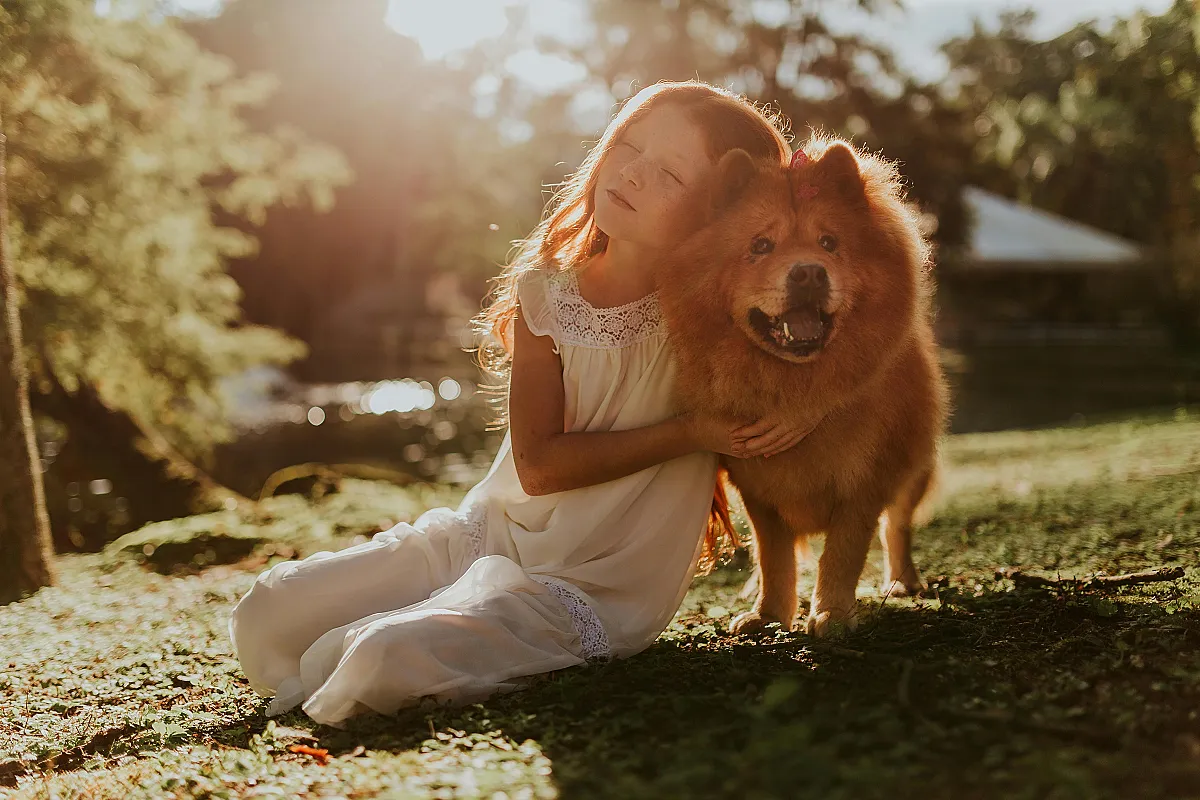
— Mom, mom, let's get a kitten. Please, or a puppy. I really want someone of my own. I'll take care of the animal, I promise...
Your child finally won, and you said "okay"? Now you face a difficult task—deciding which pet is best to get for a child in an apartment, so that neither the renovation suffers nor the chores increase too much.
Let's say right away—the renovation might survive, but the chores will definitely increase. Because you'll have a new family member with their own personality and needs, likely not matching your expectations.
So it's better to spend more time but choose a suitable and in every sense "convenient" pet.
Pets and Children: Benefits of Interaction
Of course, you worry that everything will fall on your shoulders. And you're right to do so. Regardless of the child's age, you must be prepared for this. Children are children, and they're used to parents taking care of everything. Yes, the child will play with their pet and care for it as best they can, but you'll still have to oversee everything.
But despite all the difficulties, you've made the right decision. Pets have a positive impact on children's development and play no small role in their upbringing. Children who grow up with animals become more responsible and confident, learn empathy and understanding, show a caring attitude toward nature, and have stable mental health.
⠀
So let's not waste time and start introducing you to our furry little brothers.
Which Pet Is Best to Get for a Child in an Apartment?
For an apartment, choose a small pet and consider the specifics of its care, as well as the child's age and temperament.
Rodents
If you don't like them or, even worse, are terrified of them, skip this paragraph right away. Don't torture yourself. But if the word "mouse" doesn't make you shudder, read on. In fact, they are very cute little creatures.
Hamster
Adorable fluffy balls ranging from white to dark gray with eyes like black beads. Your child will be delighted by this amusing creature and will eagerly start setting up its little house. You'll have to spend a little on a cage, a sleeping house, a water bottle, a feeder, a running wheel, and bedding.
Overall, a hamster won't cause much trouble. All you'll need to do is regularly change the bedding in the cage if the child forgets. Also, make sure the little animal doesn't run around the apartment unsupervised, or your furniture and belongings might suffer.
Hamsters live an average of 2 to 4 years. They don't eat much. They can be fed oats, dried fruits, nuts, seeds, carrots, and even breadcrumbs. And pet stores sell ready-made balanced feeds.
As for the downsides, well, it's their small size. With careless handling, you might accidentally harm the hamster. And it can bite sometimes if something bothers it.
Popular hamster breeds: Syrian, Dzungarian, Campbell's, Taylor's, Radde's, Roborovski, albino.
Guinea Pig
Guinea pigs are just as charming as hamsters. These unusual creatures win hearts with their "lively" faces and large, kind eyes like those of horses.
A guinea pig will make a great friend for your child, but you'll have to take care of it: frequently change the bedding in the cage, feed it a varied diet, stock up on hay for the winter, and even give it vitamins. Yes, you'll be the one responsible for all of this.
You'll also need to buy a cage and other accessories, just like for a hamster, but also get a special brush for its fur.
Guinea pigs live from 5 to 8 years. They are kind, smart, easily trained, and always recognize and greet their owners with amusing grunts and whistles.
Popular guinea pig breeds: Abyssinian, Agouti, Alpaca, American Crested, Himalayan, California, Coronet, Curly, Panda, Cuie, and others.
Rat
Don't be alarmed—decorative rats have nothing in common with wild ones. They look more like mice, only larger. Like hamsters and guinea pigs, rats come in various colors.
If you want a calmer and lazier pet, choose a male. He won't demand attention like a female would. Females, on the other hand, are so agile and clever that they can easily escape from the cage and "go about their business," which can lead to trouble.
Rats are very smart and easily trained. Your child can give their pet a name and even teach it commands if they are patient.
For rats, you'll need the same things as for hamsters and guinea pigs.
Types of decorative rats: Standard, Manx, Dumbo (Mickey Mouse), Self, Agouti, Topaz, Fawn, and others.
Best Small Dog Breeds for Children and Apartments
If the idea of rodents still doesn't appeal to you, take a look at our close friends—dogs. Of course, there will be more chores, but believe me, it's worth it. Stories of dogs' loyalty touch hearts and leave no one indifferent.
Moreover, a dog will teach your child to:
- be responsible and confident;
- love running and playing outdoors;
- follow a daily routine—get up early and go to bed early;
- be generous and share;
- make true friends.
Meet the best dog breeds for children. These breeds are ideally sized for apartment living, according to breeders and parents.
Poodle
Poodles come in different colors: black, white, red. They also come in different sizes—large (up to 60 cm), medium (up to 45 cm), and toy (no more than 28 cm). These dogs are very kind, smart, loyal, and playful. Even if your child is still young, you can safely get a poodle. It will never hurt the baby and will become their best friend from an early age.
Plus, poodles' curly fur barely sheds and doesn't trigger allergies in sensitive people.
Pug
Pugs get along great with children. They are friendly and affectionate. These dogs don't like to walk outside often or for long. They prefer a soft bed and tasty food. So you don't have to worry about early morning walks at 6 a.m. And that's why pugs are so chubby and clumsy.
Pugs also amusingly snort, sneeze, and make funny sounds, so they'll definitely become a source of endless positivity and good mood for your family.
Welsh Corgi
If you just touch the fur of this dog, which looks like a cross between a fox and a bear cub, you won't want to let go. These dogs are very sociable, kind, and smart. They get along wonderfully with children of all ages and love to play with them.
A corgi will become your child's friend, with whom they will play and burn off their boundless energy.
The downsides of this breed are the high cost (from $600) and almost year-round shedding.
Jack Russell Terrier
And, of course, where would we be without these jokers. Remember Milo the dog from the movie "The Mask" with Jim Carrey? That's a Jack Russell Terrier—a dog-battery that can tire out even the most restless child.
Jack Russells are ideal dogs for apartment living. They are small, can use a litter box (if trained), don't cause allergies, and are low-maintenance. But they are also very lively and energetic, so they need frequent and long walks. Otherwise, they and your child might turn the apartment upside down.
Best Cat Breeds for Children
Or maybe a cat after all? No need to walk it, train it, it purrs pleasantly, hypnotizes with its magical gaze, and entertains with its antics. All you need are a bowl, a litter box, and a scratching post.
What a cat will teach your child:
- to be active and flexible;
- to love jumping and sports;
- to find their own entertainment at home;
- to explore the world with curious persistence;
- to eat properly;
- to maintain personal hygiene.
And do you know why your child will learn all this from a cat? Because they will be friends, and children always take after their friends.
Meet the best cat breeds for children.
Angora
In addition to their luxurious majestic appearance, these cats have a gentle nature, playfulness, and tenderness. An Angora cat will become like a second mother to your child, lulling them with its pleasant purring, and a friend with whom they will have fun.
British Shorthair
Plush kitties with big eyes. They have a balanced temperament. Affectionate but not intrusive. They get along well with children and other pets. They become very attached to their owners and enjoy walking outside on a leash, like dogs.
Get your child a British Shorthair, and they will happily play with it all day and sleep soundly at night, cuddling together.
Abyssinian
These are cheerful, emotional cats that can't sit still, just like children. They are easy to train, so they quickly learn what is allowed and what isn't.
An Abyssinian cat can be a good pet for a child of any age. It is non-aggressive and calmly tolerates children's antics. The downside of this breed is the cost—from $300 and up.
In reality, there are many more "family-friendly" cat and dog breeds than we've described. You can "google" or consult with friends to choose the right pet.
You could also get fish, a bird, or a reptile. But will your child find it interesting? So weigh everything carefully first.
How to Choose the Perfect Pet for Your Child?
A few more tips. Keeping any animal has its nuances. But to make sure you, your child, and the pet are comfortable together.
Analyze the following points:
- How busy are you? Will you be able to help your child care for the animal?
- How old is the child? Will they find this pet interesting?
- What is the child's temperament? Might this pet be too calm or, conversely, too lively for them?
Once you've considered everything, talk to your family and explain that everyone must help care for the pet. Have a separate conversation with your child—they must understand that an animal is not a toy and requires great responsibility. And when all questions are resolved—boldly go to the pet store or breeder and choose your pet. Just listen more to your heart than your mind!

Leave a Comment