

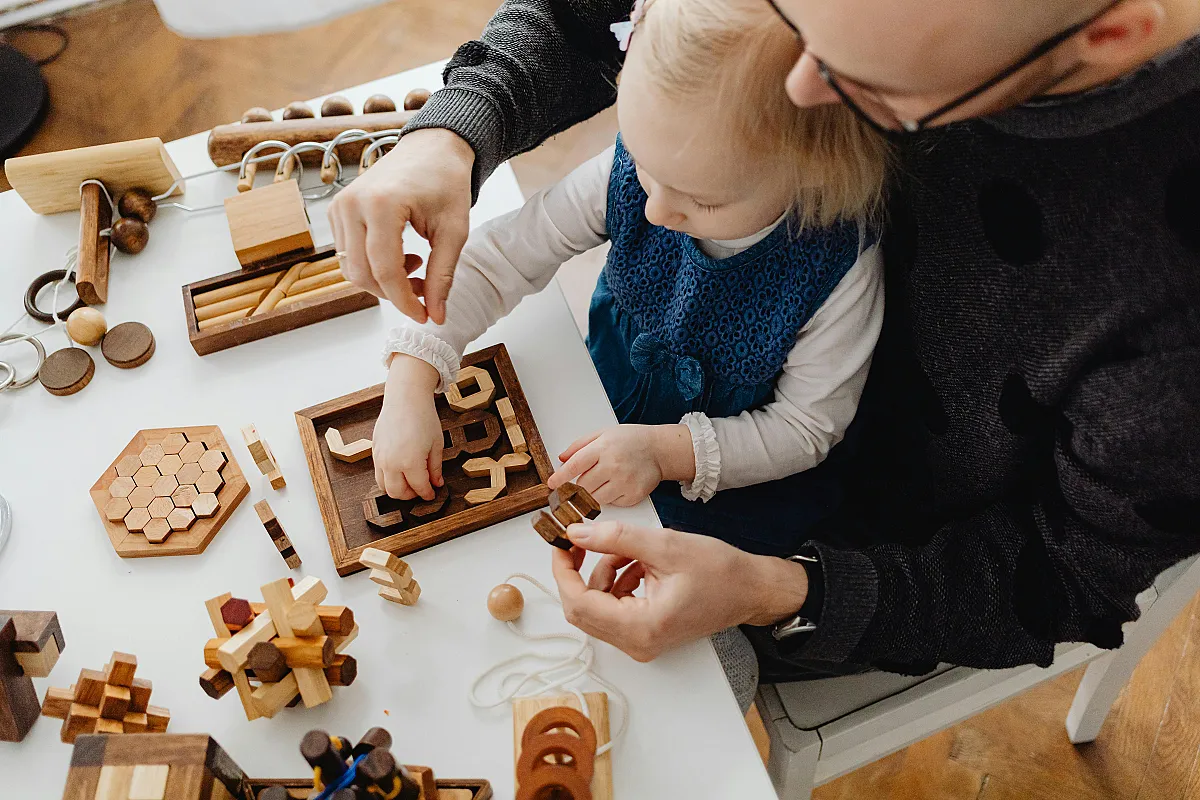
Early or timely development of the child? When parents begin to ask this question, it is important to consider one simple rule – the main thing in development is not a race for achievements, but the formation of a harmonious personality. In the article we understand how not to cross this fine line, to invest in the child the best from childhood and not to discourage the desire for knowledge.
What is early development?
Early development does not equal early learning. Sometimes these definitions can be confused. Some parents from 6 months begin to show a baby card with letters, at 1.5 years old they slip the alphabet and begin to learn numbers.
Pediatricians and child psychologists oppose early learning. Because the baby's brain is not ready for such loads. Yes, he can memorize letters and even learn to read by the age of 3, but this does not mean that he will have a high academic performance in school. Often the opposite happens – the child loses the desire to learn.
Research in this area suggests that mental functions in children mature at different times. Therefore, the untimely development of intelligence overloads the nervous system of the child and goes to the detriment of the formation of other abilities.
Unlike learning, early development of children is a soft, smooth process that stimulates interest in independent play, communication and knowledge of the world around them. This includes games “in the palms”, singing jokes, classes with spoons, cereals, plastic covers, game massage, joint reading and listening to fairy tales. Later, you can add modeling, drawing, dancing, singing and music.
Early development
The purpose of timely development is to form creative abilities, teach yourself to make decisions and navigate in the information space. The positive result of the classes will not be any achievements of the child in a certain field, but a developed thinking and desire to learn.
Below are a few recommendations for parents how to properly engage in early child development, so that it is timely and does not harm:
1. Talk more.
Communication is one of the most important skills in the modern world. And the initial communication skills are acquired in the family. Communicate with your baby from birth, showing and telling him about objects at home and on the street, comment on your actions, for example, when cooking or putting things in order. Growing up, the child will surprise you with a rich vocabulary, the ability to correctly express thoughts and conduct a dialogue.
2. Add creativity.
A preschool child develops best when the tactile, visual, and auditory senses are involved. Therefore, play with him at any convenient opportunity, sculpt from plasticine, dough, kinetic sand, draw, make crafts, sing songs, watch cartoons, play hide-and-seek, spend time together. All these simple actions are the basis of useful early development.
3. Develop the emotional sphere
Emotional intelligence is a person’s ability to understand and manage their emotions, their own and others. Therefore, it is important to develop a child emotionally from early childhood.
When your child is crying or upset, tell them what is happening to them, why they feel it, and how to deal with it. Explain how you control your emotions. The child should see support in parents, feel support and learn from the closest ones.
4. Turn on mobile games
Motor activity directly affects the development of intellectual abilities. If your child is still very young, pay more attention to the development of fine motor skills: play with cereals, buttons, beads, etc. (just do not leave the baby unattended). For older children, sports sections, outdoor games at home and on the street are suitable.
5. Don't choose one method.
There are many different methods for early childhood development. But should we limit ourselves to one? Of course not. Children are all different and you need to look for the method that your child will like. And it is best to take the appropriate tools from different methods, combine in your own and deal with the child on an individual program.
6. Give yourself freedom of choice.
Undoubtedly, adult support is important for the child, but it is also important for him to be able to get his experience. To do this, often give him freedom of choice, for example, let him decide what to wear, which club to sign up for. The conclusions that the child will draw from his own experience will teach him to analyze information and actions, apply this in life.
Important: If you try a new activity with your child and see that he does not react in any way, then he is not interested in it yet. It's worth doing something else.
Benefits of Early Child Development
If you organize classes correctly, you can achieve very good results. Let’s take a look at the positive aspects of proper child development from an early age:
- When working out, the child spends time with his parents;
- Educational games increase curiosity and lay a solid foundation for further study;
- Timely, smooth development contributes to the development of fine motor skills, intelligence, cognitive function of the brain;
- The child develops attentiveness and perseverance;
- Early development can be done independently at home.
How much early development is needed or can we do it?
Every child is unique from birth. And each baby has its own speed of development, temperament, innate abilities. Remember, there is no child like yours. This means that he will have his own schedule of mastering certain skills.
Therefore, the point of early development is not to grow a genius out of a child, but to unlock its potential. And for this, you do not need any special methods and classes in mathematics from the diapers. You just need to create an environment in which he can learn and try new things with interest and pleasure.


Leave a Comment