

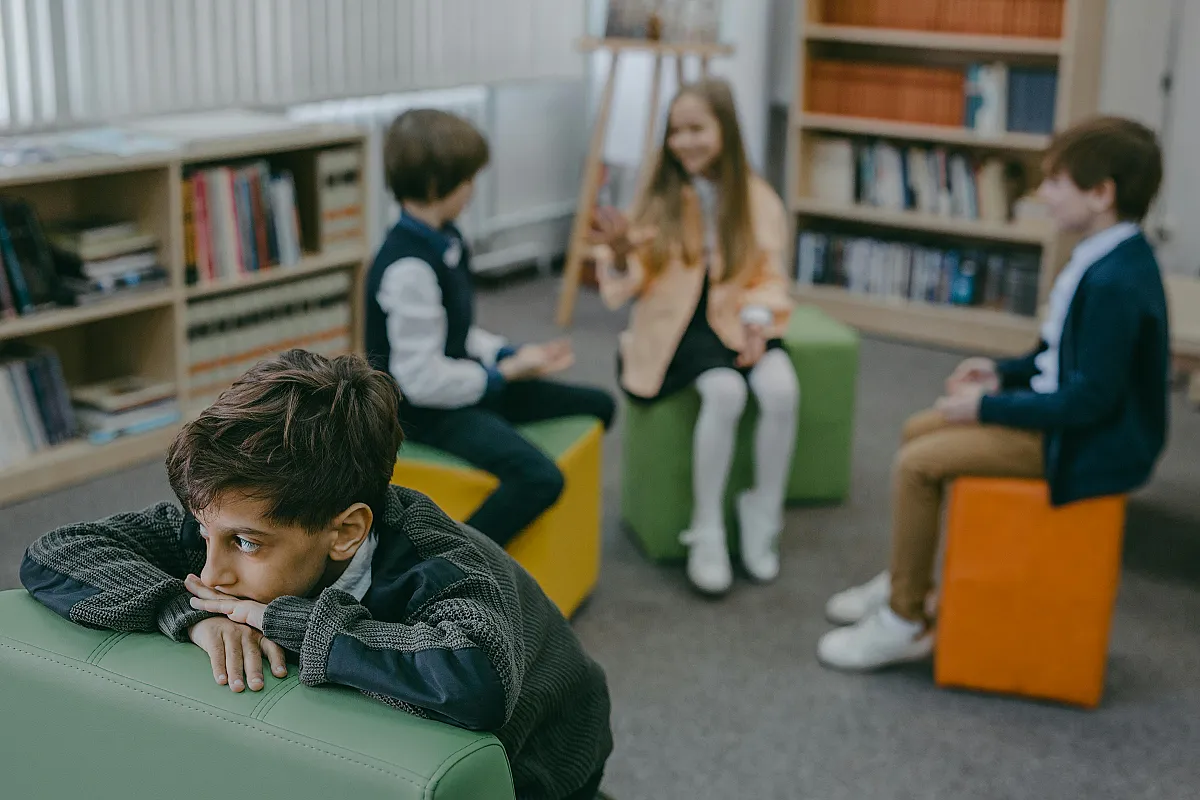
Is the child sad and hurt because they don’t want to be friends? Or does he avoid contact with his peers? Find out why it is difficult for a son or daughter to make friends and how to help.
It is difficult to overestimate the importance of warm and trusting communication between people. With friends you can share joys and sorrows, have fun, gain experience, learn new things and look at the world in a different way. Friendship is an integral part of the development of personality, and it should be in the life of every person.
When do friends show up?
For the first time children learn to communicate on playgrounds, then in kindergarten and school continue to hone communication skills. At first, contacts between children are short-term and irregular, so adults play the main role in the socialization of the child. The example of interaction between mom and dad, grandparents and relatives becomes the starting point for further building relationships in the team.
With the onset of the kindergarten period, communication with peers becomes everyday and more conscious. Children begin to intensively experience communication. And already in primary school age, the foundation is laid that prepares the child for the adolescence, when strong friendship with one-year-olds is especially important. Parents need to be alert and watch how their child behaves during the game, in what manner communicates: greedy, fights or, conversely, demonstrates kindness and trust.
5 Reasons Why Children Are Not Friends
The absence of close friends in most cases is due to the fact that the child:
Can't communicate.
He does not listen to anyone, does not respond to the words of the interlocutor, interrupts. And if he is prevented from finishing the thought, he may be offended or throw a tantrum. Children, as well as adults, are not interested in dealing with people who behave like this.
Shameful.
It is difficult to be among new people and meet the first. Timidity and excessive modesty are especially difficult in school: it is difficult for such children to act as initiators of communication, they can remain without friends for a long time.
Often, the cause of shyness is not heredity, but low self-esteem and self-doubt, which can be the result of excessive severity and demands on the child in the family.
Can't stand up for himself.
When they are hurt, they pretend that nothing is happening. His classmates consider him “downtrodden”, without authority and do not want to communicate. The reasons for this behavior are several: from too soft upbringing, to authoritarian parenting style.
Showing aggression.
Usually this behavior is observed if the child tries to take the position of a leader in the class, and he is not perceived. In attempts to prove superiority, the “pseudolider” begins to command, criticize, and call people names. Sometimes weak children because of this have to change class, school.
Read also: Child maladaptation in school: causes, signs, methods of correction, prevention
Introvert by nature
The article detailed why introvert children find it difficult to learn in a large team. It is important to understand that the introvert does not suffer from a lack of friends, it is good for him to be alone. He can always find something to do and feels great.
5 tips on how to quickly teach a child to be friends with children
When the root of the problem is clear, proceed carefully to action.
Listen and hear.
If the child says that they do not want to be friends with him, ask how his usual day in the garden, school. Be careful, do not be upset, do not judge. It is important for children to feel that adults love them, recognize them as personalities, support, help. Work out situations together, think about the exit.
Explain who is considered a true friend.
It is important for a child to understand who is a friend and who is better not to hang out with. 
A friend can:
- be silent together;
- share secrets;
- rejoice, be sad;
- tell the truth;
- be yourself;
- feel safe.
Such a landmark will help you to quickly see and find a good friend in your environment.
Watch.
When you bring your child to school, note the relationship he has with the children. If you don’t like something, explain how to behave. For example, be sure to say hello when meeting, when parting say goodbye. Learn to distinguish good from bad and avoid conflict.
As assistants in education suitable therapeutic tales, scenes with toys, your own example of communication with friends.
Stay with the child in the yard after classes
Let him play longer and make new acquaintances. The homework can wait. Children of older preschool age develop communication skills, develop relationships during the game. Thanks to joint activities, you do not need to look for topics for conversation, it is easy to be open and express yourself. Friendship is made at ease.
Teach you to share.
Giving your child a snack, recommend treating other children, sharing toys. If possible, watch how he does it and how children perceive it.
It is important not just to teach generosity, but to enjoy it. Thus, on a psychological level, the child gets used to the fact that it is pleasant to bring benefits. But at the same time, explain that others can take advantage of his kindness. It is very important to be able to notice this and not allow yourself to be manipulated.
Communicate with the parents of classmates and allow you to attend all children's holidays, where the child is called.
Children love to visit friends: there are many interesting things around and there is always company. You can not limit yourself to simple entertainment and arrange various master classes on drawing, baking, designing, etc.
Negotiate with moms and dads about activities, joint leisure activities, so that the guys can make friends and spend time together more often.

Leave a Comment