

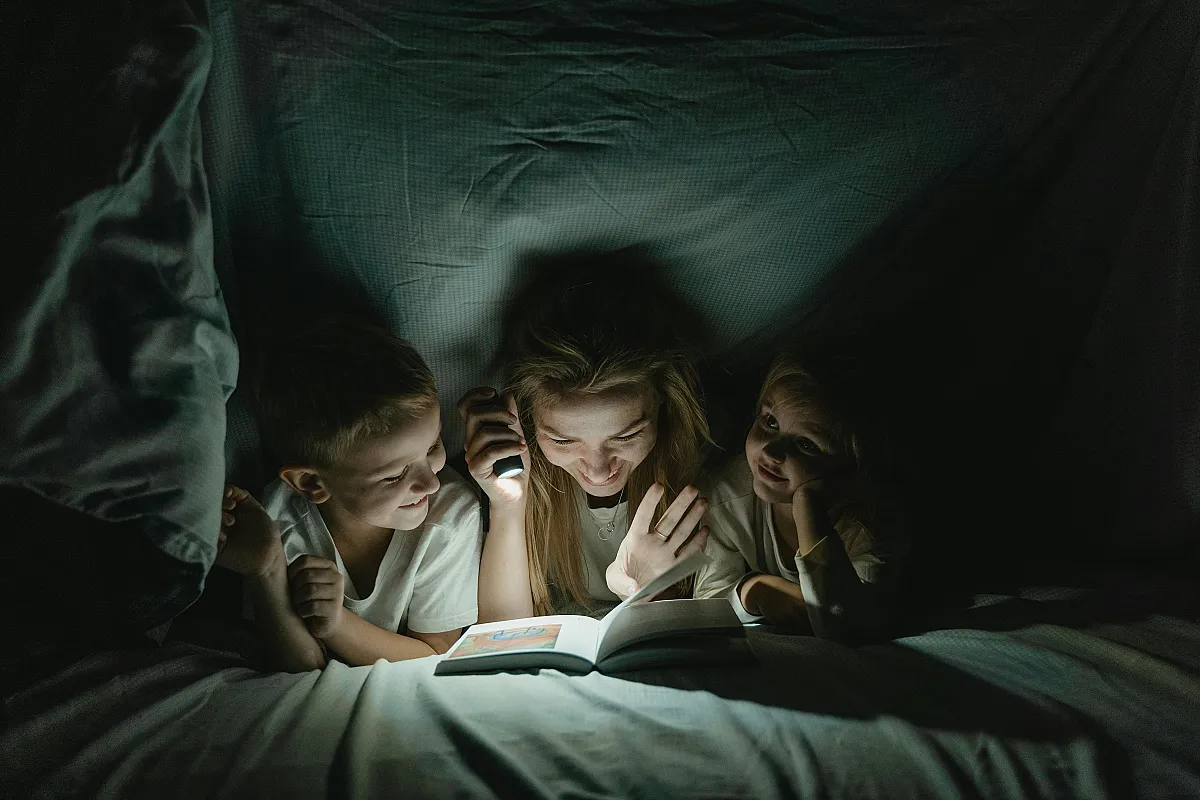
In the digital age, the role of books has changed. We have more concerns and less time to relax and read leisurely with our child. Audio and video materials, podcasts, and educational games come to the rescue, but these sources of information should not be the only ones for us or for the child.
It is books that help children grow up developed, sociable, curious, and achieve success in the future. Therefore, the task of every parent is to instill a love of reading in their child. How to do this and what literature interests children of different ages, we tell in the article.
How reading affects children's communication skills
Babies love it when mothers read to them aloud. When listening to exciting poetic stories, the baby's eyes light up and a smile appears. While he does not yet understand the meaning, he already hears and distinguishes sounds, intonation, and wordplay, gets acquainted with speech, the world of feelings, and emotions.
When a child begins to understand the meaning of phrases and sentences, books become a guide for him to the big world. They help:
- Feel safe. Next to mom and dad who read to the child, a sense of comfort, calmness, and security is created. The little person feels important, needed, and loved. At such moments, a support for further life is formed, a basic trust in the world.
- Get rid of fears. In fairy tales, good always triumphs over evil. As the plot unfolds, the baby, along with the hero, overcomes obstacles, achieves the goal, and understands that if you are not afraid, be brave and decisive, everything is possible. After reading, it is useful to draw parallels between fairy-tale stories and real life so that the child understands how everything works.
- Get acquainted with different behavior models. Children's literature reveals various character traits well. Each hero is endowed with qualities that the child can "try on" and think about whether he likes being in this role or not, what consequences bad and good deeds lead to.
As the little person grows up, books play an important role in the development of his communication skills:
- vocabulary increases – children who read well and a lot in their native language have clearer and more literate speech;
- imagination and intellect develop – a reading child always finds it easier to express his thoughts in his native or any other language;
- literacy improves – the quality of oral and written speech improves.
The main thing is that all these skills contribute to the development of self-confidence. Beautiful speech, good imagination, and high grades help the child to be more communicative and open among peers and adults. And this is one of the most valuable soft skills in the modern world.
Advice from psychologists on how to instill a love of reading in a child
Psychologists and educators from all over the world do not stop asserting that the family serves as an example for children, so:
- Take books in your hands more often, read in your free time, arrange evenings discussing the works of different authors.
- Give each other books for holidays.
- Create your own home library.
- Buy literature together with your child. Let him choose what interests him.
- Discuss what you read with your child.
- If the child does not want to, do not force him to read, but come up with quests and games related to reading, for example, based on favorite fairy tales. This way, motivation will not disappear.
- Reward reading for achievements and good behavior. Let favorite fairy tales become the same bonus as cartoons and gadgets.
Start reading to your child from early childhood. Your baby will learn to interact with books and consider them an integral part of life. And by the age of 4–5, he will want to read his first word himself. When children are interested, teaching reading becomes a matter of technique for parents.
What literature do children from 2 to 6 years old like? Recommendations for choosing children's books
When choosing books for your child, focus on his age and interests. Always think about the benefits: "What new will he learn? How will the plot affect him?". Offer literature from your childhood, where stories teach empathy, kindness, and bravery.
If your child is a preschooler, he will like books about animals, nature, or space. Schoolchildren will be interested in literature about inventions, experiments, travels, and adventures. Below are some specific recommendations on what books to choose for children by age.
Children under 3 years old
From the age of one, children are able to perceive a simple plot of a fairy tale with bright illustrations. And closer to three years, the child is able to remember a quatrain.
For babies, choose books with thick pages, juicy pictures, and additional elements: Velcro, zippers, magnets, windows, music.
Children 4 – 5 years old
During this period, there is a big leap in the child's development. You can safely choose literature with more complex plots, but illustrations are still a priority. These can be both longer fairy tales and various encyclopedias to easily answer all children's "whys".
For children from 5 years old
By this time, you can start getting acquainted with adventure literature. The child already easily analyzes the events of the story and can independently retell the plot.
⠀
In conclusion, we want to add that the first acquaintance with a book and teaching children to read should take place in a playful way. The task of parents is not just to show the child the world of books, but to interest him so that he himself has the desire to read. This is not easy. You will need pedagogical skills, strength, and patience. And most importantly, time, which is constantly lacking.

Leave a Comment