

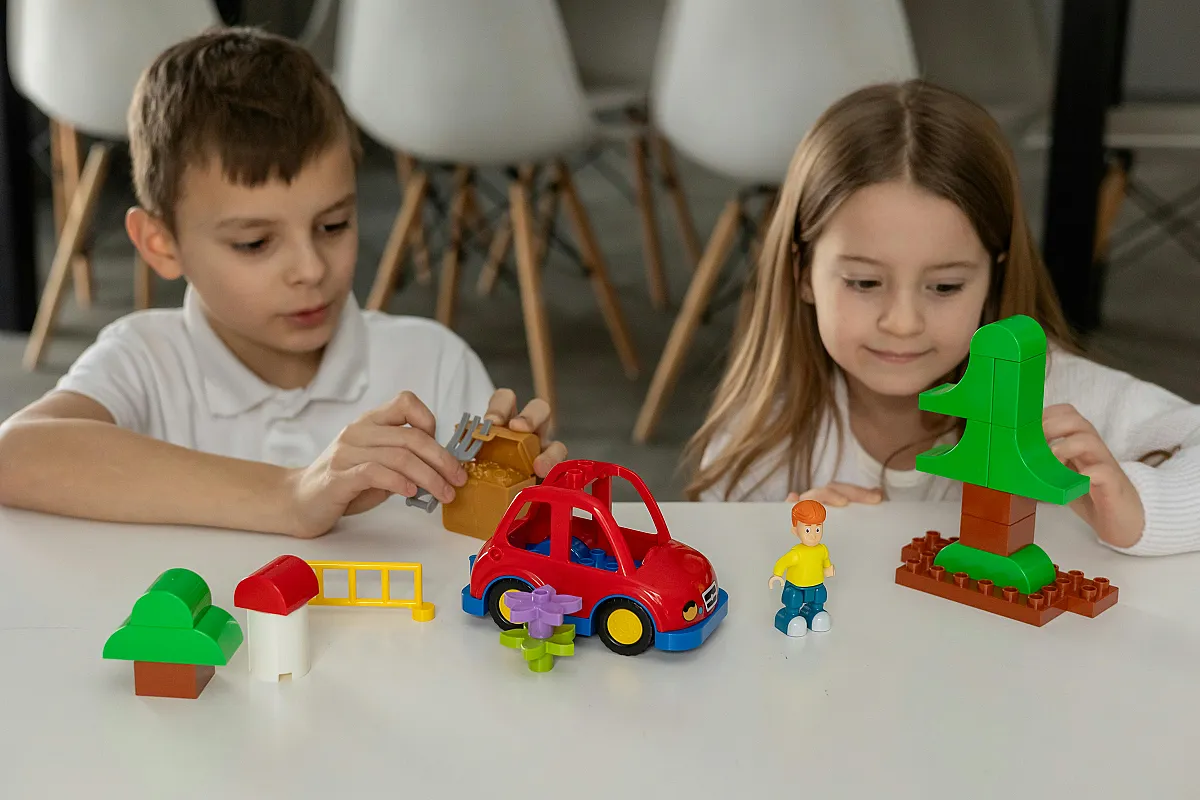
Today, parents are hearing more and more about neurodevelopment. Research shows that a child's brain is especially plastic, and games are the most natural way to strengthen neural connections. This is why neurogames for children are becoming a popular tool among educators, speech therapists, and neuropsychologists.
But what lies behind the term "neurogames"? How can you tell if they are right for your child? And can they be used at home without special knowledge?
In this article, you will learn:
- what neurogames are and which brain processes they develop;
- which neurogames are suitable for children aged 6–7 and preschoolers;
- how to choose tasks appropriate for the age;
- mistakes that are easy to avoid;
- ready-made examples of exercises and practical instructions.
What are neurogames: a simple explanation
Neurogames are game-based exercises that help develop and strengthen neural connections between the brain's hemispheres. They improve attention, memory, thinking, coordination, speech, and emotional regulation.
The foundation of neurogames is the combination of several types of activities:
- movement + thinking;
- motor skills + speech;
- vision + hearing;
- coordination + attention.
When a child performs such tasks, the brain immediately engages different "areas," which accelerates the formation of new connections.
What skills do neurogames develop
1. Attention and concentration.
Many tasks require tracking multiple actions simultaneously.
2. Memory.
Children remember rules, repeat movements, and retain sequences.
3. Speech and thinking.
This is especially noticeable when exercises are accompanied by verbalization.
4. Motor skills.
Fine and precise hand movements are closely linked to the development of speech and writing.
5. Emotional stability.
Neurogames gently train stress resilience: the child learns to cope with new tasks.
Why neurogames are important in preschool age
Preschool age is one of the key stages in a child's development. The period from 4 to 7 years is called the "window of opportunity" because the brain is especially plastic during this time: neural connections form faster than at any other age afterward. This is a time of active maturation of the frontal lobes—the areas that help the child control their behavior, concentrate, plan actions, and flexibly switch between tasks.
What neurodevelopment provides at this age
When a child performs neurogames, they simultaneously engage multiple systems: motor, speech, sensory, and cognitive. This "multiformat" mode stimulates the development of the frontal lobes and strengthens connections between the hemispheres.
Therefore, neurogames for preschoolers are a safe and effective way to support the development of skills important for successful school adaptation.
How exactly neurogames help
1. Easier adaptation to school
Games train the ability to follow rules, follow instructions, and work in a group—something especially important in a school environment. The child learns to endure waiting, complete tasks, and respond to new challenges calmly and confidently.
2. Being more attentive and focused
In neurogames, it is often necessary to track multiple actions at once: listening, moving, speaking, and maintaining sequences. This combined load gently develops concentration and voluntary attention.
3. Faster memorization of rules
The brain absorbs information better when it is linked to movement. Preschoolers remember rules through play faster than through explanations. Repeated rhythmic actions help strengthen memory.
4. Confidently performing tasks "by example" and "by ear"
This is one of the key school skills: hearing a task and completing it without missing steps. Neurogames train auditory attention, sequence of actions, pace, and the ability to control oneself during a task.
What research says
Modern neuropsychological research shows that when children move, speak, and work in rhythm simultaneously, the activity of both brain hemispheres synchronizes, and interhemispheric connections become stronger. This is the foundation for:
- speech development;
- formation of visual-motor coordination;
- sustained attention;
- readiness for reading, writing, and mathematics.
The effect is especially pronounced at ages 4–7, when the brain is most responsive to such influences.
Neurogames for children aged 6–7: key features
The age of 6–7 is a period when children transition from free play to more structured learning. During this time, voluntary attention, the ability to plan actions, and follow instructions develop rapidly. This is why neurogames become especially effective at this age.
Why this age is special
- The child can already perform tasks consisting of several sequential steps.
- Interest in rules and game patterns emerges.
- Self-control skills are actively forming but are still unstable.
- Children begin to learn to "keep the task in mind" and switch between actions.
All of this makes neurogames an ideal tool for school preparation.
What neurogames for children aged 6–7 include
1. Rhythmic movements in a specific order
These are games where movements are performed according to a pattern: clap — step — turn — pause.Rhythm helps maintain attention, and changing movements trains switching.
Example:
The child performs claps according to the pattern "right — left — both — pause," trying not to get confused.
2. Exercises for self-control and attention switching
Tasks where you need to stop in time, change the pace, perform the "opposite action," or wait for a signal.
Examples:
- "Red — stop, green — go"
- move one hand quickly, the other slowly
- freeze-mobile game with rules
Such exercises develop volition — one of the basic skills for successful learning.
3. Tasks with reciting text or rules
An important combination — movement + speech. It stimulates interaction between the motor and speech systems of the brain.
Example:
Walk around the room, clapping on each stressed syllable of a short rhyme.
This helps children process auditory information faster and maintain rhythm.
4. Hand and foot coordination
The more complex the movements — the more intense the interhemispheric connections work.
Examples:
- steps in one rhythm and claps in another;
- drawing different shapes with both hands;
- games where the left and right sides of the body perform different tasks.
Such exercises strengthen visual-motor coordination — the foundation of writing and reading.
For example, the teacher says:
"Clap — step — clap — turn — repeat!"
The child performs the sequence of movements while simultaneously reciting a rhyme or short poem. This engages:
- auditory attention,
- memory,
- rhythm,
- gross motor skills,
- self-control.
A combination of several tasks is the key to the neurodevelopmental effect.
Benefits of neurogames for children 6–7 years old
1. Improved readiness for school workloads
Neurogames help the child:
- get involved in the learning process faster,
- follow instructions,
- work according to rules and examples,
- maintain a sequence of actions.
This reduces stress during the adaptation period.
2. Help in maintaining attention in class
The child learns to concentrate on one task, filter out distractions, and work at a given pace. This is especially important for reading, math, and writing lessons.
3. Strengthening self-control skills
The ability to stop in time, perform a movement accurately, wait for a signal is the foundation for:
- neat writing,
- solving problems step by step,
- understanding instructions,
- behavior in class.
4. Development of spatial and logical thinking
Complex movements, changing directions, rhythm, and sequences train:
- spatial orientation,
- visual-motor coordination,
- classification,
- building logical chains.
These skills are directly related to mathematical abilities and success in reading.
Main types of neurogames
1. Motor neurogames
These are exercises where the child performs movements in a certain sequence.
Examples:
- "Clap–step": clap — step forward — clap — step back.
- "Mirror": the child repeats the adult's movements, trying not to fall behind.
- "Snake with hands": one hand makes circular movements, the other taps on the table.
Benefit: develops coordination, interhemispheric interaction, attention.
2. Rhythmic neurogames
Tasks where movements or speech are performed in rhythm.
Examples:
- clapping to music;
- stomping feet according to the pattern "right–left–pause";
- reciting poems with accents on certain words.
Benefit: improves auditory perception, speech tempo, motor rhythm.
3. Neurogames with speech elements
Help train articulation, speech speed, vocabulary.
Examples:
- repeating tongue twisters while performing movements;
- games for word selection ("words starting with the letter..." while stepping);
- "Alternatives": the adult says a word — the child picks the opposite.
Benefit: activates speech areas of the brain, develops speech and thinking.
4. Graphomotor neurogames
Suitable for both younger and older preschoolers.
Examples:
- tracing mazes;
- completing symmetrical drawings;
- drawing with both hands simultaneously.
Benefit: prepares the hand for writing, develops motor control and visual-motor coordination.
How to play neurogames correctly: tips for parents and teachers
Proper presentation of neurogames is half the success. Even the most useful exercise will not yield results if the child finds it difficult, boring, or too energy-consuming. Below are simple but important recommendations that will help make the activities effective and enjoyable.
Tip 1. Start with the simple
Before moving on to complex combinations, it is important to ensure that the child confidently performs one basic element: a clap, a step, a circular hand movement, a short word, or a rhythm.
Why this is important:
- the brain needs a "foundation" on which more complex patterns can be built;
- if you start with multitasking, the child will quickly get tired and lose interest;
- success at the simple stage increases motivation.
Example:
First, the child only does claps. Then — claps + step. After that, you can add a word or rhythm.
Tip 2. Add speech gradually
Many children find it difficult to move and speak at the same time. This is normal — combining motor and speech tasks requires practice.
How to proceed:
- first, practice the movement;
- then add a simple word;
- after that — a rhyme, short sentence, or rhythmic speech.
It’s important to give the child time to feel confident.
If they stumble — it’s not a mistake, but part of the process.
Tip 3. Consider mood and state
Neurogames work best when the child is engaged and interested.
If the child is tired, overstimulated, upset, or very active — it’s better to shorten the session or choose a calmer game.
Remember:
- neurogames should not become “training for results”;
- emotional comfort is more important than the number of repetitions;
- ease and a playful atmosphere are the main secrets of effectiveness.
You can start the game with the phrase:
“Let’s try together. If it’s difficult — we’ll simplify. That’s okay.”
Tip 4. Short sessions are better than long ones
The optimal duration is 3–5 minutes a day.
This way, the brain receives “frequent impulses,” and the child doesn’t get tired or lose interest.
Why short game blocks work better:
- they help maintain focus;
- create a sense of “this is simple and quick”;
- build the habit of practicing regularly.
You can do 2–3 mini-sessions throughout the day: on the way to kindergarten, before reading, during breaks between activities.
Tip 5. Repetition is more important than complexity
Sometimes adults think they need to constantly complicate tasks to see progress.
But in neurodevelopment, repetition is key to strengthening neural connections.
Each repetition is a “consolidation” of the skill.
Therefore, even simple exercises yield powerful results if done regularly.
How it works:
- the brain recognizes familiar patterns faster;
- movements become more precise;
- reaction speed increases;
- the child’s confidence grows.
The main focus is on consistency, not complexity.
Mistakes in neurogames
- Too fast a pace. The child starts rushing and loses concentration.
- Long sessions. Short and frequent is better.
- Attempting to “speed up” development. Neurogames are not a race, but support.
- Comparing children to each other. Everyone develops at their own pace.
Practical block: a ready-made guide on how to start
Step 1 — Situation analysis
Observe what comes easier to the child and what causes difficulties: attention, memory, speech, coordination? This will help choose suitable games.
Step 2 — Preparation
Select 2–3 neurogames appropriate for the age. Prepare the space: open area, calm atmosphere, minimal distractions.
Step 3 — Implementation
Start with simple actions. Repeat for 2–3 minutes. Once the child masters the task — make it more complex: add speech, rhythm, or complicate the movement pattern.
Frequently asked questions
1. At what age can you start neurogames?
Most neurogames are suitable from ages 3–4. The key is to choose tasks based on the child’s abilities. Preschoolers benefit from simple movements, while children aged 6–7 can handle more complex combinations.
2. Can neurogames be done at home without a specialist?
Yes. Simple neurogames are accessible to parents: clapping, stepping, rhythm, attention games. For complex exercises, you can consult a specialist.
3. How much time should be spent?
Optimally, 5–10 minutes a day. The main thing is regularity. Short, frequent sessions yield better results than long training sessions once a week.
4. Will neurogames help prepare for school?
Yes. They develop attention, speech, self-control, and visual-motor coordination — key skills for successful learning.
5. Is special equipment needed?
No. Most games are performed without equipment. Sometimes you can use a sheet of paper, music, or simple objects.


Leave a Comment