Logical thinking is one of the key skills that forms the basis for successful learning and development of a child. In preschool and primary school age (3-7 years), children actively learn about the world, and games become their main way of learning. It is through play that logic, attention, memory and perseverance can be effectively developed without turning the process into a boring duty. In this article, we will look at various logical games, such as bee games, mazes and coloring books with letters, and learn how to make the learning process fun and productive.
Why logical games are important for child development
Logical games are not just entertainment, but a powerful tool for the comprehensive development of the child.
Development of thinking: Games teach you to analyze information, build chains of reasoning, find patterns and make decisions.
Attention and concentration: To solve logical problems requires concentration, which trains the ability to concentrate on one thing.
Memory: Many games require memorizing rules, sequences, or arrangement of elements.
PerseveranceLogical tasks often require time and patience, which helps develop perseverance.
Spatial thinkingLabyrinths and designers develop the ability to navigate in space.
Fine motor skillsGames with small details, coloring books, strokes contribute to the development of fine motor skills, which is directly related to the development of speech.
Types of logical games for children 3-7 years
There are many logical games that can be adapted to the age of the child.
Bee games
Description: These can be board games, where the bee has to find a way to the flower, or sequence tasks, where you need to arrange the bees by size / color. Often used cards with images of bees, hives, flowers.
Development: Attention, sequence of actions, fine motor skills (if you need to move or collect something), the basics of the account.
Example: Draw on a piece of paper a few flowers and a hive. The child’s task is to guide the bee from the hive to each flower in turn, without crossing the lines.
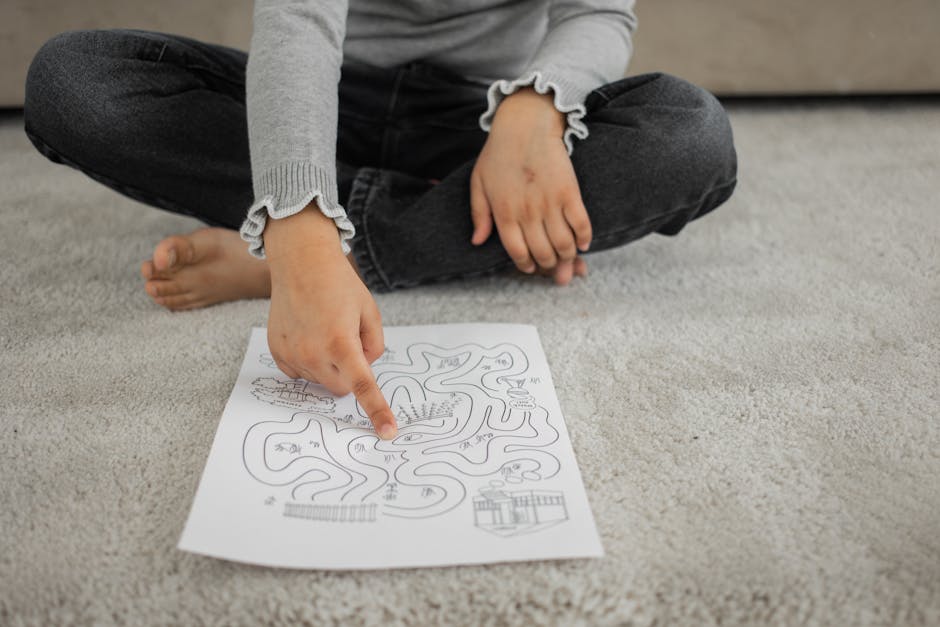
Description: This is a classic logic game where you need to find a way out or a way from one object to another. Mazes can be on paper, in the form of floor games or even interactive applications.
Development: Spatial thinking, ability to plan actions, problem solving, perseverance.
Example: Print a simple maze where you need to help a bunny get to the carrot. The child can pass it with a finger, a pencil or even a small toy.
Description: These are coloring pages, where each segment is marked by a letter, number or symbol, and it corresponds to a certain color. The child should paint the segment in the desired color.
Development: The study of the alphabet/account, the development of logic on the model, attention to detail, perseverance, fine motor skills.
ExampleColoring, where all areas with the letter "A" should be painted in red, with the letter "B" - blue and so on.
Other popular logic games
Puzzles.: Develop spatial thinking, fine motor skills, the ability to assemble the whole from parts.
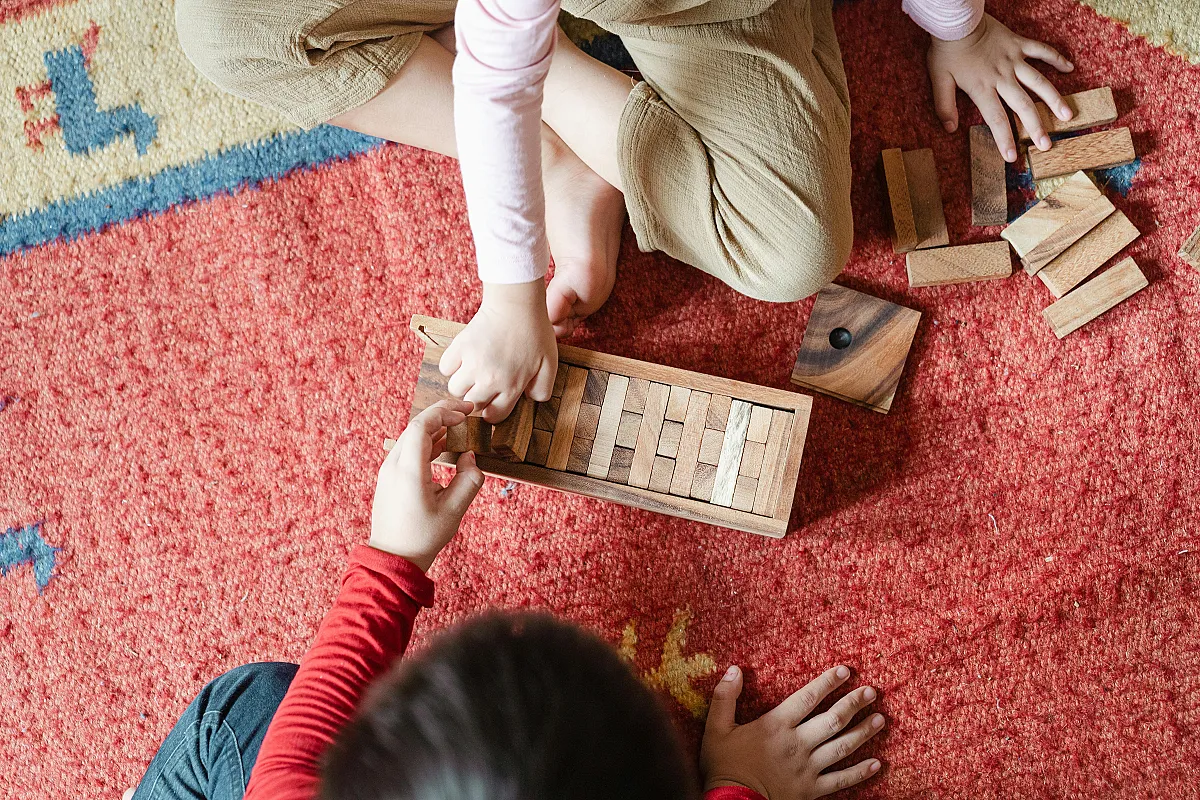
Designers (Lego, wooden blocks): Develop creativity, spatial thinking, logic, fine motor skills.
Sorters.: For the youngest – the development of logic, fine motor skills, the study of forms and colors.
Comparison and classification games: "Find extra", "Distribute in groups" (for example, animals, fruits, vegetables).
How to organize the game correctly
In order for games to bring maximum benefit, it is important to follow several rules.
Age.: Choose games appropriate to the age and level of development of the child. Too complex games can discourage interest, too simple games will not develop.
Interests of the child: Consider your child's preferences. If you like animals, look for games with animals.
Promotion: Praise your child for his efforts, even if he does not immediately cope with the task. Keep him interested.
Unobtrusiveness: Do not force your child to play if he does not want to. Offer games, but give them a choice.
Playing together: Play with the child. This not only develops it, but also strengthens your bond.
Gradual complexity: Start with simple tasks and gradually move on to more complex ones.
Examples of specific games and tasks
Here are some ideas for games that can be easily arranged at home.
Bee and Flowers (for 3-4 years): Draw 3-4 flowers of different colors and a bee. The task is to connect a bee with a flower of the same color as its stripes.
Labyrinth for typewriter (for 4-5 years): Draw a maze on a large piece of paper. The child must run a small machine or finger through the maze from start to finish.
"Painting by letters" (for 5-7 years): Print a coloring paper where each section is marked with a letter. Create the key: A is red, B is blue, C is green, etc. The child paints the picture by the key.
"What's extra?" (for 3-7 years): Name four words, three of which belong to the same group, and one is superfluous. For example: "Apple, banana, carrot, pear." The child needs to say a word and explain why.
"Find a couple" (for 3-5 years): Place in front of the child cards with the same images (for example, two cards with a cat, two with a dog). The goal is to find couples.
How to choose logical games for a child
When choosing games, focus on the following criteria:
Age marking: Manufacturers usually indicate the recommended age.
Developing skills: Think about what skills you want to develop in your child (attention, memory, logic, motor skills).
Quality and safetyGames should be made of safe materials, do not have sharp corners and small details that the child can swallow.
Interest of the child: The most important thing is that the child likes the game and causes positive emotions.
Conclusion
Logical games are a great way not only to entertain a child, but also actively contribute to his intellectual development. Games about a bee, mazes, coloring books with letters and many others help to form critical thinking, attention, memory and perseverance. Create a play environment, maintain the interest of the child, play together – and you will see how your child will grow curious, smart and confident.
What types are there? Types of memory in children are classified according to various criteria. Depending on how long information is retained, a distinction is made between short-term, working, and long-term memory. In terms of mental activity, memory can be visual, motor, emotional, and verbal-logical. And based on the involvement of the will, it is divided into involuntary and voluntary memory.
What’s this all about? A child’s strengths aren’t always obvious to parents. Mom and Dad might envision their child as a programmer or a lawyer, while the child may have a knack for creativity or sports. That’s why the first step in developing a child’s strengths is for parents to learn to recognize them.





Leave a Comment