

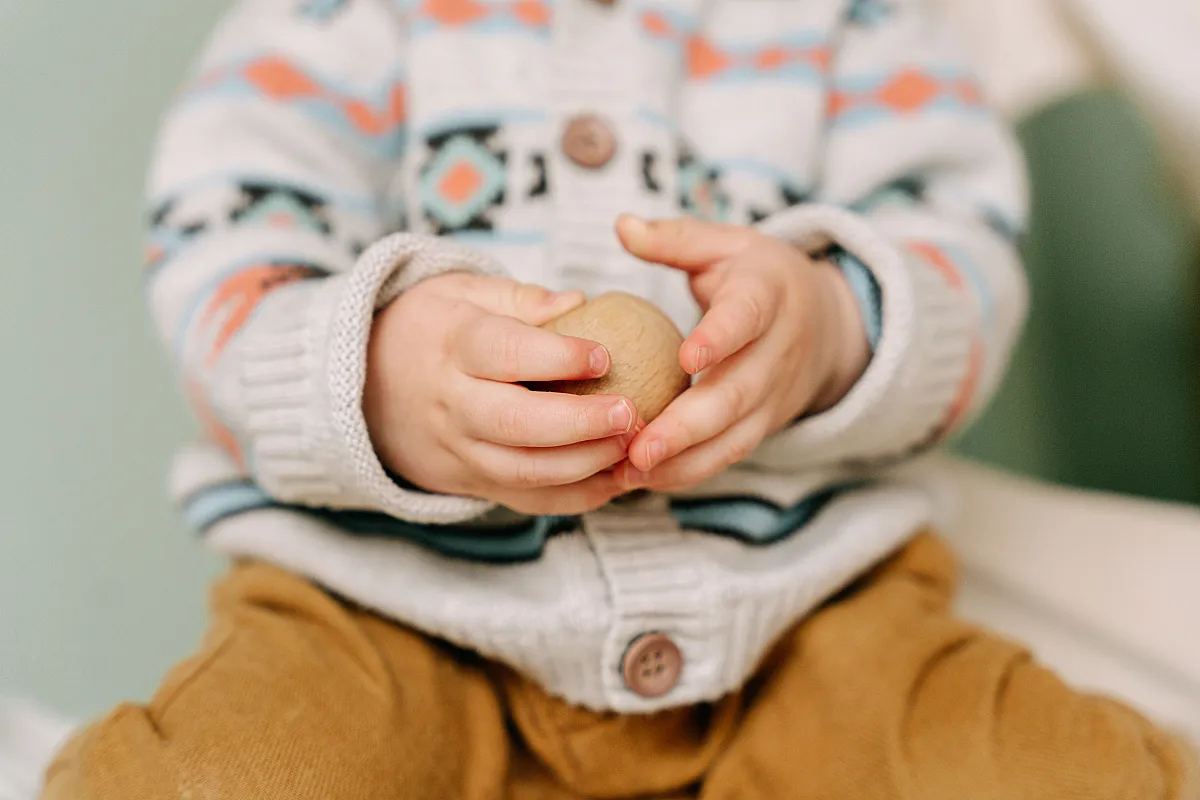
What’s this all about? The development of fine motor skills in children is a crucial aspect of their overall development, one that influences the development of speech, writing, and other skills. These activities help children coordinate the movements of their hands and fingers, which is essential for performing everyday tasks such as buttoning buttons, drawing, and writing.
What should you look for? Various exercises and games are used to develop fine motor skills in children. For example, drawing, sculpting with modeling clay, stringing beads, and playing with small objects. All of these activities help improve coordination and develop finger dexterity.
What Is Fine Motor Skills in Simple Terms
It is the ability to control the movements of the fingers and hands to perform precise and coordinated actions. To pick up a toy or fasten a button, the brain sends a signal to the muscles, which in turn try to perform the desired movement. This process seems simple, but it actually requires time, practice, and patience.
It’s hard for toddlers to learn to control their hands right away—spoons fall, toys slip out of their hands, and their fingers don’t do what they want. Adults sometimes get frustrated watching these attempts, but this is exactly how a child learns about the world.
The development of fine motor skills in children is a gradual process: the more a child tries, the more confident their movements become. Dexterity is not an innate gift but the result of constant practice.
Using exercises to develop fine motor skills in children—such as finger plays, drawing, modeling clay, and buttoning buttons—helps them master these important skills more quickly.
The Impact of Fine Motor Skills on Child Development
The ability to control hand movements is an important skill that influences a child’s overall development. A child’s independence in daily life depends on how precisely they can perform fine motor tasks.
For example, the skills needed to draw neatly, mold with playdough, or assemble building blocks require well-coordinated movement of the fingers and hands. These skills do not develop immediately but gradually as the child masters new movements.
However, the development of fine motor skills in children involves not only physical skills but also the acquisition of other important abilities:
- Development of verbal expression. Hand movements are directly linked to the speech centers of the brain. This is why activities aimed at developing motor skills are often used by speech therapists to improve a child’s speech.
- Development of memory and thinking. Working with small objects—such as sorting beads, stringing rings, or putting together a jigsaw puzzle—helps children learn to analyze, remember, and predict the outcome of their actions. This stimulates cognitive processes and develops imagination.
- Self-confidence and socialization. When a child independently completes various tasks—such as building a pyramid, drawing, or tying shoelaces—they feel more confident. However, if they encounter difficulties in areas where their peers succeed effortlessly, this can affect their self-esteem and relationships with others.
That’s why developing fine motor skills in children through play and creativity is the best way to improve these abilities. Learning becomes interesting, natural, and joyful.
What Happens If Children’s Fine Motor Skills Are Not Developed
The ability to control hand and finger movements develops gradually. And this process can be supported through play, activities, and everyday tasks. It’s important for parents to focus on developing fine motor skills, as many of a child’s abilities depend on them.
[sidebar]
If this aspect is neglected, serious difficulties often arise:
- Delayed speech development. Children who do not use their hands much may start speaking later or face pronunciation problems. Sessions with a speech therapist can help correct this, but it will take a long time.
- Problems with attention and thinking. It’s harder for the child to concentrate, remember information, and show an interest in creative activities.
- Learning difficulties. Learning to read, write, and do math may be very challenging. Memorizing letters and numbers takes longer, and when writing, the child may mix up or omit characters.
- Low self-confidence. In a group of children, the little ones quickly notice differences in abilities. If a child struggles with tasks that their peers complete easily, this can affect their self-esteem. In some cases, this lack of confidence can lead to withdrawal or aggressive behavior.
- Difficulties with daily living skills. If a child’s fine motor skills are underdeveloped, they may struggle to use scissors neatly, draw, tie shoelaces, or fasten buttons. Such small challenges can cause frustration and reduce their desire to learn new things.
- Impaired motor coordination. Children with underdeveloped motor skills often make unnecessary movements, tire more quickly, and take longer to complete everyday tasks, such as getting dressed on their own or eating without adult assistance.
How Parents Can Support Early Fine Motor Skill Development in Children
The development of coordination and precision of movement begins in the first months of a baby’s life. Even at an early age, you can help your child master basic skills: gently massage their fingers and let them touch objects with different textures.
Let your baby experience soft and hard surfaces, as well as smooth and rough materials. This stimulates sensory perception and promotes the early development of fine motor skills.
Special exercises aren’t necessary at this stage, but you can start incorporating elements of them into play around 8–9 months. As your child grows, the tasks for developing fine motor skills should become more challenging to gradually build dexterity and precision in their movements.
It’s important to remember that working with small objects isn’t the only factor in a baby’s development. Active play that engages all the muscles is also essential. Give your child the opportunity to move freely—to crawl, walk, run, and jump.
But any activity should be enjoyable. If your child is tired or shows no interest, don’t force them. Methods for developing fine motor skills in children will only be effective if the child is engaged in the process and enjoys completing the tasks.
Fine Motor Skill Development in Children Under One Year of Age
During their first year of life, babies make tremendous progress in mastering movement. At first, their hands are usually clenched into fists due to increased muscle tone, and only over time do they learn to consciously unclench their fingers.
By about three months, an infant begins to explore the world around them more actively: reaching for toys, touching their face and clothes, and trying to grasp objects and explore them with their mouth.
By four months, their movements become more precise—the baby is able to hold a toy with both hands and tries to grasp it with one. By five months, their movements become coordinated, and both hands begin to work together.
By eight months, the baby can already pick up objects not with the whole palm, but with a few fingers. By ten months, they confidently transfer objects from one hand to the other and control their movements using their vision. And by one year, they master a more precise pinch grip with their fingertips, which helps them pick up small objects.
How can you stimulate the development of fine motor skills in children under one year of age?
- A gentle massage of the hands and fingers helps relax the muscles and develops sensitivity.
- Games designed to develop fine motor skills in children, such as “Ladushki” or “Magpie,” not only entertain the child but also promote coordination.
- Exposure to different textures—rough, smooth, soft, and hard objects—helps babies improve their tactile perception.
- Toys that are easy to hold: small balls, fabric books, and pieces of cloth.
- Simple actions—rolling small balls of dough or playdough, threading ribbons through a hole, and trying to unfasten or fasten Velcro on clothing—all help make their fingers more dexterous.
The earlier you start paying attention to your child’s fine motor skills, the easier it will be for them to master new skills in the future, including speech, writing, and performing daily tasks independently.
Fine Motor Skills Development in Children Aged 1, 2, and 3
During this period, the child becomes more active: they learn to walk confidently, try to run, climb stairs, and jump. But in addition to general mobility, their ability to control precise movements is also developing rapidly.
The development of fine motor skills in children of this age includes the ability to hold small objects steadily, try to eat with a spoon, turn the pages of books, press buttons on toys, and draw their first lines with a pencil.
During this period, children seek to explore the world around them through action: they try to open cabinet doors, unscrew lids, bang objects together, and explore them by touch and taste.
At the same time, they show an interest in creative activities—toddlers love playing with paints, kneading dough or modeling clay, even though they can’t yet create anything meaningful.
How can you help develop fine motor skills in 1-, 2-, and 3-year-olds?
- Games that develop finger movements. Simple exercises, such as alternately forming “rings” with their fingers, attempting to string beads, and clenching and unclenching their fists, help improve coordination.
- Tactile activities. Fine motor skill development is accelerated through contact with various materials: finger painting, playing with dough, sand, beans, or water helps improve hand sensitivity.
- Everyday activities. It’s helpful for toddlers to fasten and unfasten Velcro, put lids on and take them off containers, and sort objects by size or color.
- Educational toys. Activity boards and soft books with fasteners and laces help develop finger dexterity and promote logical thinking.
Developing fine motor skills in children through play and everyday activities aids not only their physical but also their mental development. The more opportunities a child has to manipulate different objects, the faster and more effectively they master new skills.
Fine Motor Skills Development in 4- to 5-Year-Olds
By the age of four, children become more independent, and their movements are precise and confident. During this period, a child is able to hold a pencil firmly, trace simple geometric shapes, and use a spoon and fork neatly.
Self-care skills also improve—they learn to zip up zippers, tie simple knots, and handle small objects.
Hand-eye coordination develops actively through play and creative activities. Children enthusiastically sculpt, make paper crafts, paint, and create collages. They are also drawn to logic puzzles, building sets with small parts, and games involving sorting and grouping objects.
If a child avoids such activities, this may indicate a problem with fine motor skill development, which is important to identify early on.
How can you help a 4- to 5-year-old with this?
- A variety of finger exercises. You can suggest they form different shapes with their fingers, make small rhythmic movements (for example, “running” them across the table), or try quickly touching each finger with their thumb in the correct sequence.
- Practice with small objects. Good exercises include fastening bracelets or straps, rolling napkins into tubes, transferring grains from one container to another using a spoon, and twisting thin strips of paper into spirals.
- Outdoor activities. In addition to playing in the sandbox, you can collect leaves with your child and arrange them into patterns, search for objects with different textures by touch (for example, a smooth pebble among rough ones), and build shapes out of twigs.
- Creative Activities. Instead of the usual drawing, you can use unusual materials: draw with your fingers in wet sand, lay out patterns with pieces of fabric, roll thin strands of dough or clay, or create patterns with buttons and thread.
If parents have concerns or questions about their child’s developmental pace, consulting with an educator or psychologist about fine motor skill development in children can help identify individual characteristics and select appropriate exercises.
Gradually increasing the complexity of tasks not only helps develop hand dexterity but also fosters the essential cognitive skills a child will need in the future.
Fine Motor Skills Development in Preschool-Aged Children
During this period, hand and finger coordination develops rapidly. Children learn to handle small objects with confidence, improve their dexterity, and acquire useful skills needed for daily life and creative activities.
The child can already hold a pencil confidently, use a spoon and fork neatly, and fasten buttons and zippers. Developmental activities help them refine these skills, making their movements more precise and confident.
Special attention should be paid to the development of fine motor skills in 6-year-olds: they are actively preparing for school. The child will need to learn to write, draw, and sit at a table for extended periods—which is why it’s important to strengthen their fingers and develop precision in their movements ahead of time.
How can you help your child develop fine motor skills?
- Games with string and rope. Weaving simple bracelets, threading laces through holes in cardboard shapes, or creating patterns with knitting yarn helps develop precision of movement.
- Working with fabric and soft materials. Sorting pieces of different fabrics, rolling cotton balls, and sewing buttons onto thick cardboard—these exercises help strengthen the fingers.
- Games with natural materials. You can encourage your child to arrange patterns using acorns, seashells, and dry leaves, or to build shapes out of small pebbles or nuts.
- Developing finger strength. Squeezing a sponge, rolling modeling clay or soft dough into thin strands, and crumpling paper with one hand—these activities help strengthen the small muscles.
- Using colored clothespins. Playing with them—for example, attaching them to cardboard to form sunbeams or creating patterns—trains grip strength and precision.
- Musical activities. These involve playing children’s instruments such as a drum, tambourine, xylophone, or even a finger piano. They help develop hand coordination and improve rhythmic movement.
Developing fine motor skills in children is a goal that should be approached systematically and with the child’s age in mind. Such activities not only strengthen the hands but also develop perseverance and attention span, preparing the child for learning and everyday tasks.
Frequently Asked Questions About the Development of Fine Motor Skills in Children
If you don’t pay attention to the development of fine motor skills in children, it can negatively affect both the physical and emotional aspects of a child’s life. That’s why it’s important to help your child improve these skills in various ways from an early age.
How is it related to speech development?
Hand and finger movements directly affect the areas of the brain responsible for speech, as these areas are located nearby. Developing precise movements stimulates the formation of speech skills, helping children express their thoughts more effectively.
Up to what age is it necessary to improve fine motor skills?
The ability to control these movements continues to improve throughout life. However, the development of fine motor skills in young children is especially important, since it is during this period that the brain is most receptive to stimulation and basic skills are actively forming.
Why aren’t the results of these exercises always noticeable?
Progress depends on the child’s individual characteristics, their nervous system, and their overall level of physical development.
In addition, exercises often focus only on three fingers—the thumb, index finger, and middle finger—although for optimal results, it’s important to engage the entire hand, including the ring finger and little finger. A comprehensive approach yields the best results: exercises should include flexion/extension and muscle stretching/relaxation.
This material is based on the following sources:
- Denisova, L. Yu. “Development of Fine Motor Skills in Children Aged 2–4 Through Plasticine Art” // Proceedings of the Annual International Scientific and Practical Conference “Education and Training of Young Children.” — Mosaika-Sintez LLC, 2016. — No. 5. — pp. 565–567.
- Liryasyova, V. Development of Fine Motor Skills in Preschool-Aged Children Through Games and Play-Based Exercises. — 2017.
- Zhirkova, A. M. Fine Motor Skills in Early Elementary School-Aged Children //Intellectual Potential of the 21st Century: Stages of Cognition. — 2013. — No. 17. — pp. 60–63.
Featured image: freepik / freepik.com



Leave a Comment