

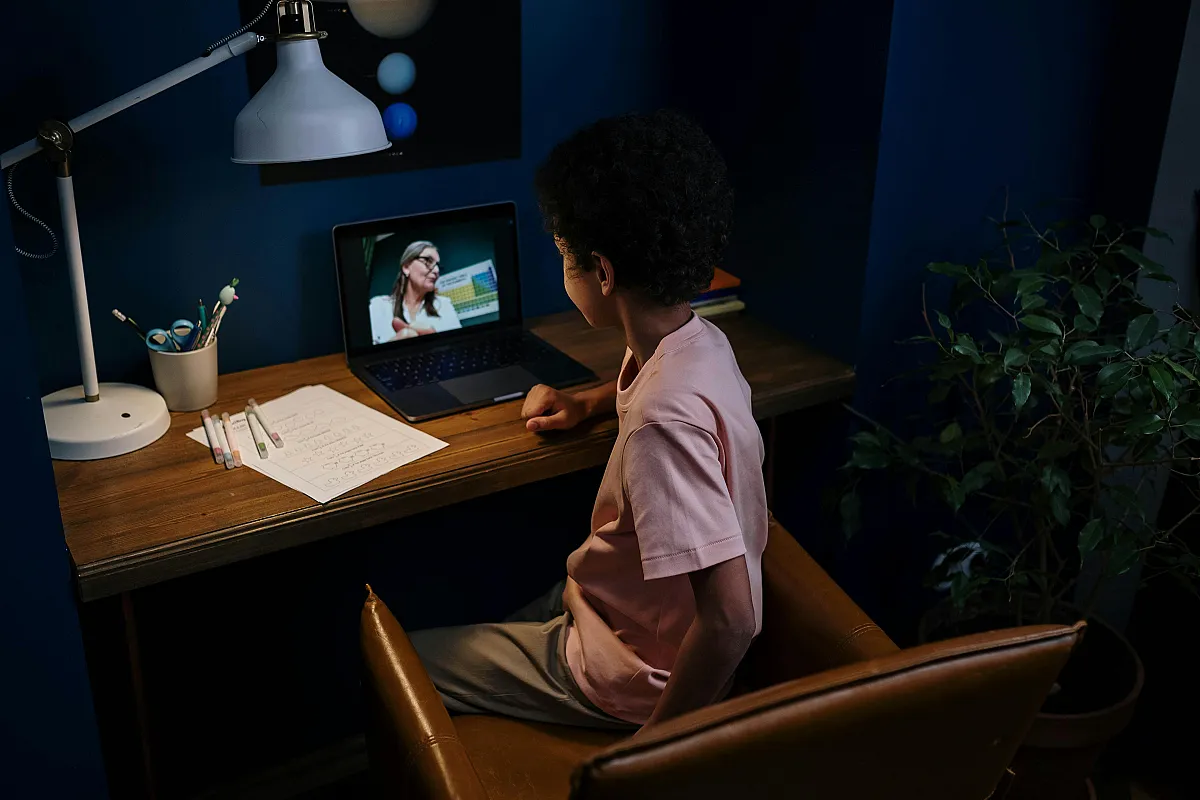
Surely you have heard the term “critical thinking” and something about the fact that it must be developed in a child to easily cope with difficulties in school and in life. Let us understand together how important this skill is for a person and how to develop critical thinking in a child from childhood.
Every day, tons of different information come down on us from different sources. Have you noticed how many false facts, doubts and outright fakes are among her? With the advent of new online platforms and social networks, this number will only grow. Therefore, it is so important to be able to analyze everything with a “cold head” and weed out the unnecessary.
Simply put, critical thinking is the ability to think, reason, build logical chains and make decisions based on your thoughts.
How Critical Thinking Can Be Useful in Life
If we talk about children, the skill is picky about information, it will be useful to them everywhere: in school, in communication, and in everyday life.
A child with developed critical thinking will:
- Always have an opinion. Children often take an example from others and copy the behavior of classmates, friends, bloggers. Unfortunately, these are often not the best examples. A child with developed critical thinking will be able to distinguish the bad from the good and not succumb to negative influences.
- Less stressed. The ability to filter and analyze information even in the most difficult situations helps to maintain a stable emotional state and correctly assess errors.
- Be able to express your thoughts beautifully and logically. How can you convince someone that you are right? Like an adult. Right, you need to make convincing arguments and defend your opinion. Critical thinking helps not only to think logically, but to reason and persuade.
- Good study. Thanks to the ability to delve into, structure and summarize information, children are more easily given the school curriculum and further education.
- Have the basis for a successful career. In the 21st century, the most sought-after qualities are creativity, critical thinking, soft skills. In each field of activity today requires specialists who are able to conduct competent communication and defend their point of view.
How to develop critical thinking in a child
The first thing to start with is broadening your horizons. To be able to assess the situation from different angles, the child needs to know a lot. To do this, you need to constantly replenish your “database” with:
- reading of fiction and popular science literature. As they say, he who reads much knows much.
- watch educational YouTube channels with documentaries and programs;
- Observe the behavior of people to understand what motives drive them in certain situations, draw conclusions and develop their own behavior patterns;
- More communication and exchange of experience.
How to teach your child to think critically in practice
Teach them to ask the right questions.
The basis of the development of thinking is the craving for knowledge. And here you can not do without the ability to ask questions correctly. To make the child more interesting, you can train playing.
For example, after watching a movie or cartoon together, ask them to come up with 10 to 20 questions about the plot and ask them to you. In the process, the child will learn to notice the details and view the topic from different angles.
Show me how to analyze what you read.
With the help of questions, you can also analyze and analyze the information read:
- What did the author want to convey to the reader?
- What should the reader understand or do after reading the book?
- Whether the author backs up the information provided with facts, or more uses general phrases, for example, “it’s not a secret for anyone”, “everyone knows”, “no one will argue”, etc.
- Is there something behind the main meaning?
Analyzing what you read with questions, the child will learn to form an independent opinion, supporting it with facts and logical arguments.
Say that information can be obtained from different sources
To learn to think critically, a child must be able to use and evaluate different sources of information. For example, to compare the authors of articles on the same topic: who is a theorist and who is a practitioner, who has more experience in this field, on the basis of what he drew such conclusions, whether it was possible to draw another conclusion, etc. The most reliable information will be that which is well supported by evidence and facts.
Learn to reason and anticipate scenarios
It is good when a child, before saying or doing something, sits down and thinks about how it can turn out for him or how to achieve the goal in the fastest and safest way.
You can also learn to reason with questions. For example, you can write on a piece of paper, “What happens if I don’t learn lessons or get a bad test score.” Below describe the possible consequences. And below, what actions will help solve this problem in the best way.
Explain how to draw conclusions from mistakes
Nobody likes to be wrong. But the most valuable experience in life is due to mistakes. Therefore, in order for errors to help grow, and not become “on the same rake”, you need to be able to analyze them correctly. Explain to your child that only those who do not try anything are wrong. Sometimes it is normal to stumble, the main thing is to then ask yourself what this situation has taught you and how best to act next time if this happens again.
How to Develop Critical Thinking in the Game
In preschool and school age, games are ideal for developing thinking. Let’s look at board games that will be interesting for children of different ages.
"Yes or No."
Children love this game because of its simplicity. You need to use leading questions to guess the situation or word. The answers to the questions should be brief “yes” or “no.” As the game progresses, the range of options narrows and brings the player closer to the correct answer. There are game options for children of different ages.
"Elementary."
This is a series of card games on various topics, in which you need to calculate the villain based on the information received. At each stage of the game, it is important to decide which data is important and which is useless. The game is suitable for children from 8 years old.
Brainy Trainy. Critical thinking
This is a card game where cards can be divided by difficulty levels. The game will be interesting even for adults. Here you need to include attentiveness and observation, compare facts, look for contradictions and check information for reliability.
How to develop critical thinking in a child
Of course you have to read books. There is literature on this topic for both children and parents. Below are some examples.
1. Harry Potter and the Methods of Rational Thinking by Eliezer Yudkowski
If you don’t know how to talk to your child about critical thinking, then this is a good book. It differs from the original in that here Harry is primarily not a wizard, but a prodigy who studies probability theory and quantum mechanics. He thinks critically and learns to look at everything from a scientific point of view.
2. “Critical thinking. Analyze, Doubt, Form Your Opinion by Tom Chatfield
This book is more suitable for adults. It will help you learn to think correctly, notice details and critically perceive information. The author of the book tells how to become more convincing to others through thinking.
3. “Critical thinking. Iron logic for all occasions, Nikita Nepryakhin, Taras Pashchenko
This book will be useful for teenagers. Here, in simple and clear language, we explain how to reason in ordinary life situations that happen to children at this age. You can, for example, learn how to argue with parents correctly, as well as train critical thinking with the help of simulators. There are ten chapters in the book that are easy to read because they are written in the form of fascinating instructive stories.


Leave a Comment