

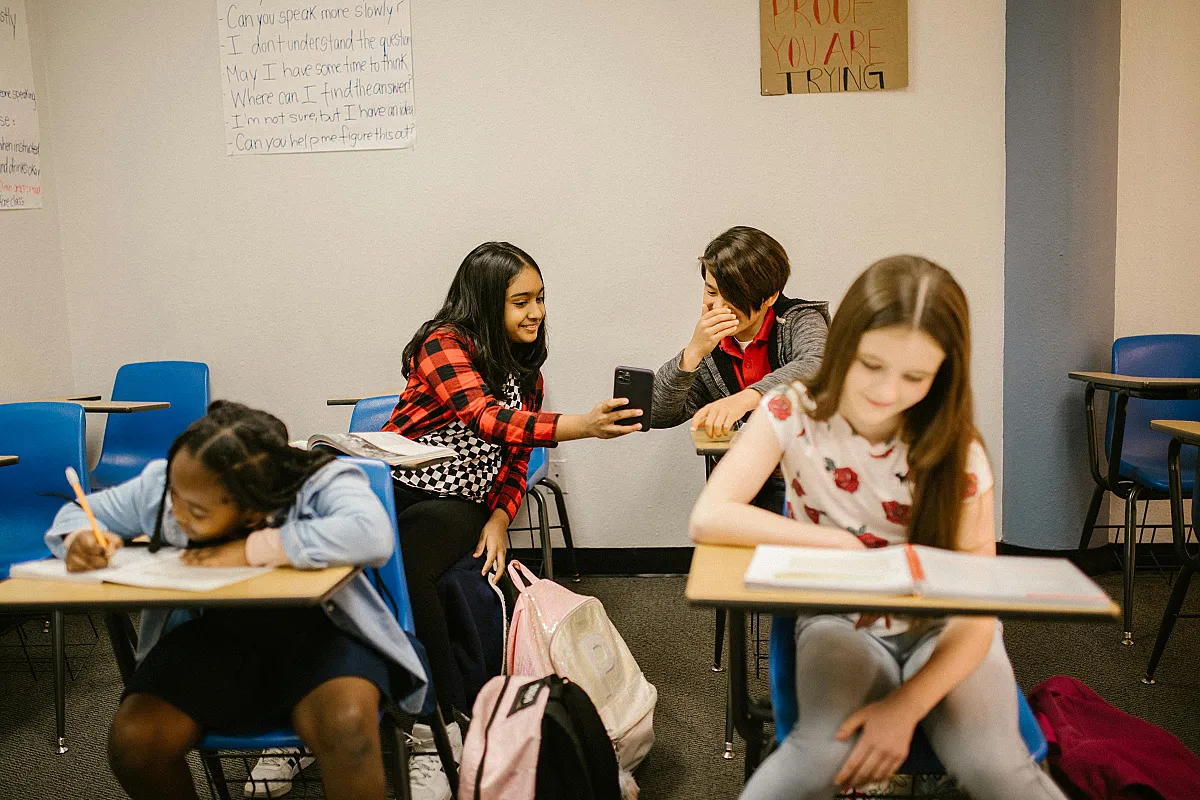
How much time do children spend online? Sometimes as much as at school and at home. The modern world is impossible to imagine without the Internet with its social networks, messengers, games, educational and entertainment resources. And since today’s children were born in the age of advanced technology, familiarity with the virtual world begins early for them. And that's not a bad thing. This is just a fact that needs to be taken into account.
According to statistics, 88% of 4-year-old children go online with their parents. At the age of 8-9 years, they are increasingly using the Internet on their own. By age 14, parental control is only 7%. At the same time, more than 80% of teenagers have a profile in social networks.
Therefore, it is important that the virtual space is safe for the child. The availability of the Internet and the unformed ethics of communication in children online make cyberbullying one of the main social risks. This is especially true for adolescence.
Types and forms of cyberbullying:
- Flaming, or arguing for the sake of argument. This is a purposeless discussion in chat, personal correspondence or comments, full of negative coloring. This is not harassment, but a simple conflict, to both sides of which a large number of people can connect.
- Trolling, or provocation. Unlike flaming, Internet trolls attack a person, not a statement that outraged them. They consciously take the victim out of themselves and provoke rash actions. At the same time, the aggressors enjoy it. The purpose of trolling is not to relieve internal tension, but fun.
- Heating, or hate speech. These are constant negative comments and messages to a particular person. It can take on a large scale, which makes the victim feel that the whole world is against her.
- Cyberstalking, or Internet harassment. The most dangerous form of Internet bullying. The stalker collects information about the victim for the purpose of blackmail, threats, spreading slander, sexual harassment, etc.
- Outing, or disclosure. Publishing a person’s personal information without their consent for the purpose of humiliation. This is the posting of victim data, personal correspondence, photos, etc.
- Griffing, or harassment in online games. The goal of the griffer is not to win the game, but to deprive others of pleasure. Persecutors can target the victim’s character, permanently kill him or block access to the game world.
- Fake, or fake account. It's impersonating another person. Buller creates a victim's account, uploads a photo of her and adds friends to write nasty things on her behalf.
- Boycott. The scheme is similar to a boycott in real life – the victim is removed from shared groups and chat rooms or agrees to ignore her messages.
How to know if your child is a victim of Internet bullying
An important feature of online harassment is the lack of “feedback”. In real life, the aggressor sees the victim and can assess his condition. When bullying on the Internet, the attacker does not know what is happening on the other side of the screen and whether he has achieved his goal. This means that he cannot stop in time, which makes aggression excessive.
As with bullying in real life, it can be difficult for a child to admit that they have been bullied. Almost 80% of children do not seek help from their parents. Many of them are convinced that parents do not understand the Internet. Secondly, it can be difficult for children to allow their parents into their intimate space.
So how do you recognize the danger? If you notice that a child reacts negatively to the sound of a notification on his gadget, spends unusually much on the Internet or, conversely, little time, if he deleted his profile from the social network – this may mean that he has become a victim of cyberbullying.
How to protect your child from cyberbullying
Internet bullying is easier because it is remote and safe for a bully. The risk of physical or other punishment is minimal.
But getting rid of harassment in the global network is much easier than in reality.
Communication with the child
As with offline bullying, this item remains unchanged. First of all, try to find out what exactly happens to the child. Don't try to pressure him or spy on him. Just offer your help and promise to be on his side. This promise is extremely important to keep.
Under no circumstances should a child be blamed. Even if it seems to you that he broke the wood himself, believe me, the victim suffers enough and regrets that he posted photos, communicated with strangers, etc.
You don't have to discount the problem. The Internet is an important part of the life of a modern teenager. “No matter what they say, just don’t read” – such phrases will not convince him to stop worrying.
Lockdown
The easiest way to protect yourself online is to block the aggressors.
In any social network or messenger there is a blacklist function. Once accessed, the user can no longer visit your page and send private messages.
Many networks offer not only to block the person who insults you, but also to complain about harassment and harassment. This is even more effective, because it will pay attention to the account of the aggressor.
If the child faced aggression not on their territory, but, for example, in a chat or online game, you can use the same useful option “Complain”. It is important to explain to him that this is not snitching, but the only effective way to confront the abuser in order to protect yourself and others.
Ignoring
Not every adult can adequately perceive negative comments and aggression in their address. What about the kids?
However, it is ineffective to enter into a dialogue with abusers, try to justify, prove something or insult in response. The victim’s anger and powerlessness is the bully’s goal. Often, in the absence of a reaction, trolls, haters and griffers fall off themselves.
Privacy settings
It should be taken into account that teenagers have an important hidden need – the desire to like. They need to feel beautiful and desirable. Fighting this need is pointless. And to deny is dangerous.
For a child, having a “page” is a way to socialize, learn how to communicate, build a “personal brand”, find like-minded people, make useful connections, get support. A closed or impersonal account, like a ban on correspondence with strangers, will deprive him of these opportunities. Therefore, there is no need to close the account if the child does not come under cyberbullying.
However, it is worth explaining to him the concept of privacy on the Internet. Make sure you publish as little personal information as possible. And no matter how great the temptation to share with subscribers everything that happens – the address, phone, places of work of parents and other important data should not become public.
If bullying still takes place, you should make the account closed. Stop users who are not on your friends list from tagging your child in photos and videos, sending messages and leaving comments on your profile.
Appeal to the site administration, the police and the court
For insults, defamation, violation of privacy, threats, humiliation of human dignity, harassment and other things, the law will protect. Please note that evidence will be required to initiate a police case.
How to deal with the consequences of cyberbullying children
Stopping bullying is half the battle. To heal the trauma caused to the self-esteem of the child - the second half.
How a parent can help:
- Explain to the child that he is dear to you always, in any situation. Whatever happened. You are always on his side and love him. It is very important for him to feel reliable support, to understand that he is not alone.
- Do not underestimate what happened and the emotions of the child. Even if you think that nothing terrible happened, for a teenager everything is very serious. He is depressed and humiliated, haters from the Internet for him - a strong reason for frustration. Share your feelings and tell them it’s important to live through them.
- Share your story if you have ever experienced bullying. Don’t compare your situations—it’s not trying to figure out who’s more unlucky, it’s trying to explain to your child that you hear and understand them.
- Focus on the good. In a situation of bullying, children often begin to perceive themselves in a negative way. It is important to live with them good emotions, fill the days with happy experiences.
Adult life is full of worries. But try to be attentive to your children and maintain a trusting relationship. It's important for their safety.


Leave a Comment