
Our Educational Kids Blog Page 8

Discover educational adventures, creative activities, and expert parenting guidance!

How to teach a child to distinguish truth from fake?

How to teach a child to distinguish truth from fake?

In today’s world, we face a huge flow of information. One information is useful, interesting, the other is harmful, false and manipulative. Today, fakes lie in wait for us everywhere: on the Internet, social networks, the media, there are few and well-known people in stories. They affect our opinions, behaviors, emotions, as well as our health and safety. How to teach a child to distinguish truth from fake? How can you help them develop critical thinking, ability to analyze and verify information? Let's find out in this article.

Lina Park Lina Park
The Power of Social Intelligence

The Power of Social Intelligence

Social intelligence is the ability to interact with others, understand their emotions, and feel comfortable in different social situations. For children, it is the ability to play with other children, share toys, understand the emotions of their friends and resolve conflicts.

Lina Park Lina Park
Why are bedtime stories so important for children?

Why are bedtime stories so important for children?

All children love bedtime stories! Kind and instructive stories help to calm down quite quickly and prepare for sleep. They also develop imagination, language, memory, logic, emotional intelligence and creativity. Let’s take a closer look at the benefits of magic stories for children of different ages and give some tips on how to choose and read fairy tales before bed.

Lina Park Lina Park
How to choose a mathematics course for a child

How to choose a mathematics course for a child

Choosing a math course isn’t just about choosing a curriculum, it’s a valuable investment in your child’s future. Mathematics underlies many aspects of our lives and can become the foundation for the development of logical thinking, attention and memory. But how to choose a course that will bring the maximum benefit to the child? Let’s look at the key points that are worth paying attention to.

Emma Carlisle Emma Carlisle
How to motivate a child to study

How to motivate a child to study

Motivation plays a key role in learning, especially for children. When a child loses interest in learning, it can lead to lower academic performance, loss of self-confidence, and even conflict with parents and teachers. Understanding how to motivate a child to learn can be a crucial factor in their successful development. In this article, we will look at the main causes of low motivation and offer practical tips to help parents and educators maintain and develop a child’s interest in learning.

Lina Park Lina Park
Children's quarrels: how to help children peacefully solve their problems

Children's quarrels: how to help children peacefully solve their problems

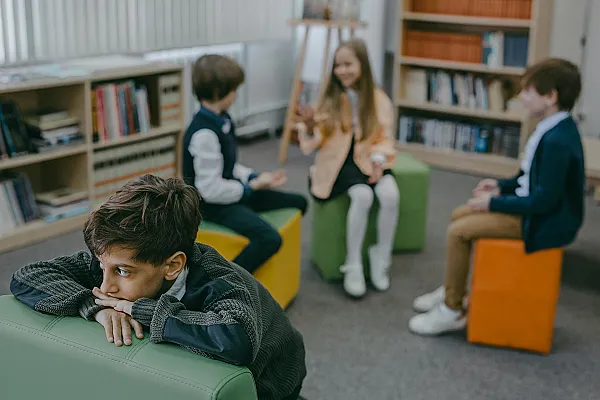
Conflict between children is a natural part of their development, especially at a young age. Parents often face a situation where children quarrel, swear or cannot find a common language. In such cases, the question arises: how to properly help children resolve the conflict without destroying their independence and without creating a false idea that it is necessary to reconcile only by order? In this article, we’ll show you how to teach children how to resolve conflicts constructively and why it’s important not to intervene too harshly.

Lina Park Lina Park
Readiness to read

Readiness to read

The time is approaching when your child will go to first grade, and one of the key skills he will have to master is reading. How do you know if your child is ready for this important step? How can you, as a parent, help them along the way? Early learning to read is not a race, but a systematic process that should take into account the individual characteristics and interests of the child.

Emma Carlisle Emma Carlisle
Logic games for a child

Logic games for a child

Logical thinking is one of the key skills that forms the basis for successful learning and development of a child. In preschool and primary school age (3-7 years), children actively learn about the world, and games become their main way of learning. It is through play that logic, attention, memory and perseverance can be effectively developed without turning the process into a boring duty. In this article, we will look at various logical games, such as bee games, mazes and coloring books with letters, and learn how to make the learning process fun and productive.

Zara Mitchell Zara Mitchell